Guides
ICBC Physiotherapy Scheduling: What BC Clinics Must Know Before Booking
ICBC physiotherapy scheduling rules determine when a BC clinic can book treatment. Learn pre-approval steps, waitlist design, and documentation needs.
What to take away
- ICBC physiotherapy scheduling rules require pre-approval before most treatment plan starts or extensions.
- Provincial ICBC rules, municipal business licence rules, and private clinic policies have different authority.
- BC clinics need a treatment plan form, clinical notes, and a claim number before booking follow-up ICBC treatment.
- Missing pre-approval can mean the clinic does not get paid and the patient may be billed directly.
Who has jurisdiction over ICBC physiotherapy scheduling
ICBC, the Insurance Corporation of British Columbia, is the provincial Crown corporation that administers basic vehicle insurance and accident benefits in British Columbia. ICBC does not approve clinic locations, but it does approve treatment plans for payment. Municipal governments issue business licences and zoning approvals for a physical therapy clinic. Private clinic rules cover waitlist priority, cancellation windows, and hours of operation. A private policy cannot reduce or replace ICBC's pre-authorization requirement.
What triggers ICBC pre-approval
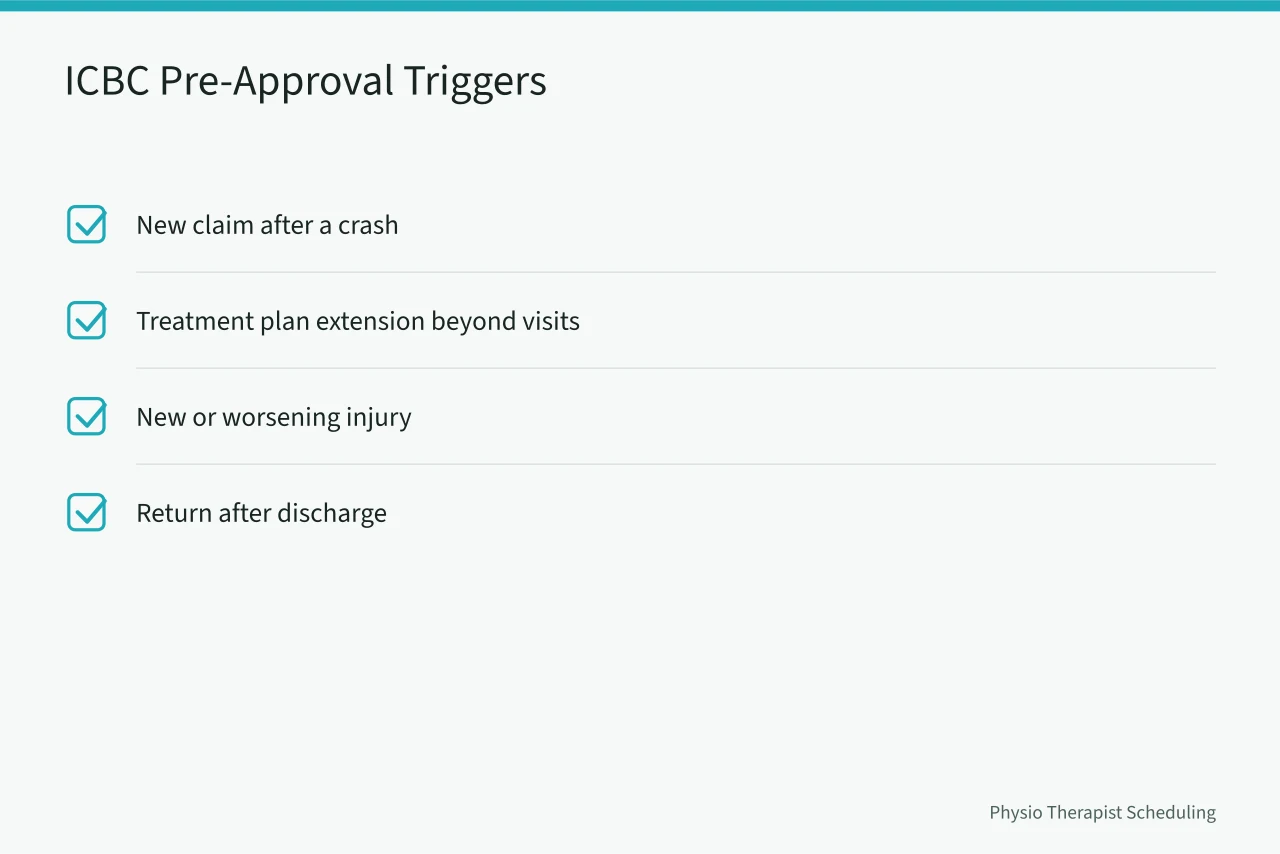
ICBC pre-approval is triggered when a patient who reports a motor vehicle collision needs physiotherapy beyond an initial assessment or emergency visit. It also applies when a treatment plan is extended, when a new injury is added, or when a previously discharged patient returns. A clinic should treat pre-approval as the permission to schedule and book follow-up appointments. The provincial body controls payment approval, the municipality controls the building, and the clinic controls its own waitlist.
What to submit for ICBC physiotherapy scheduling
A clinic cannot book an approved ICBC course until the treatment plan and supporting records are ready. The table below lists the documents a BC clinic needs before scheduling follow-up physiotherapy.
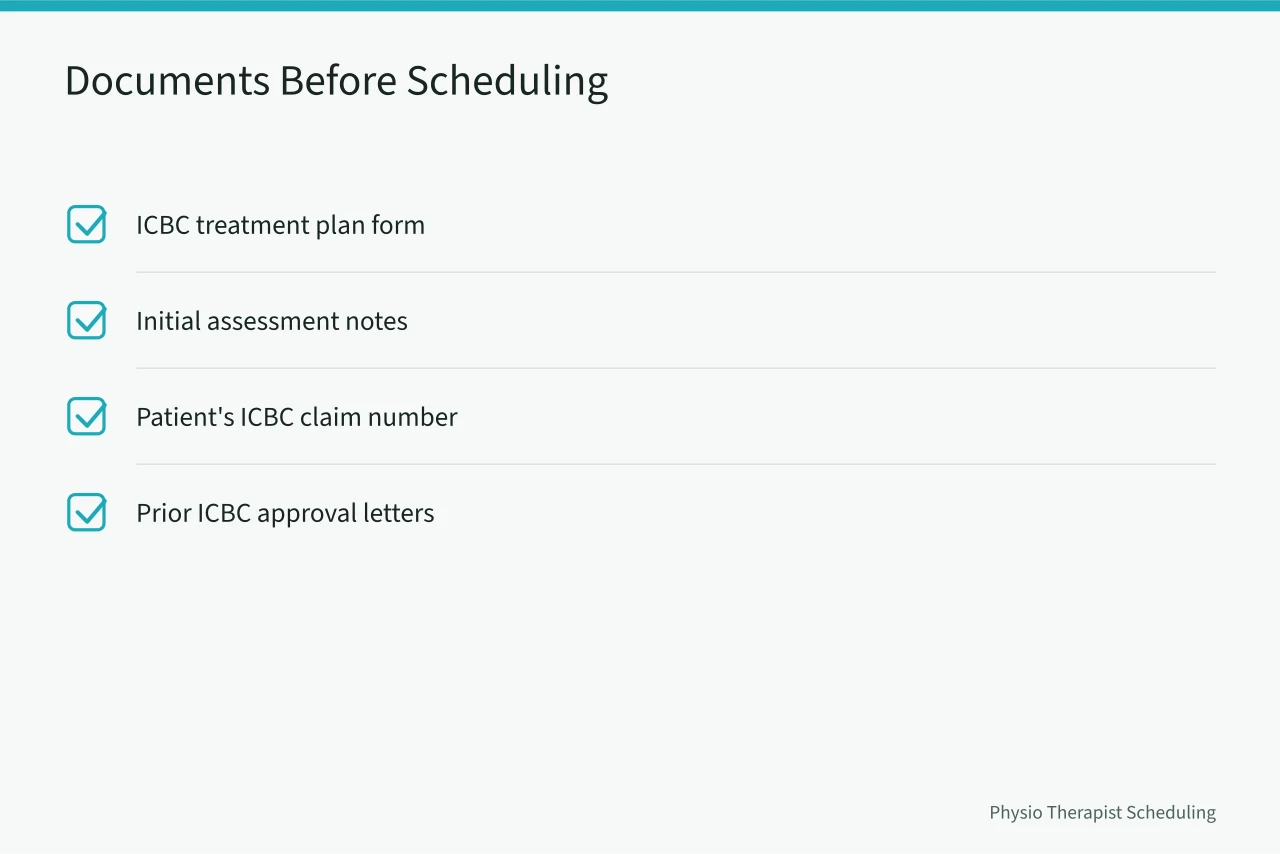
| Document | Who prepares it | Why it matters |
|---|---|---|
| ICBC treatment plan form | Treating physiotherapist | Describes diagnosis, goals, and the number of visits requested |
| Initial assessment notes | Treating physiotherapist | Support the clinical need for the plan |
| Patient's ICBC claim number | Patient or clinic front desk | Connects the plan to the correct accident benefit claim |
| Prior ICBC approval letters | Clinic records | Show the current approved visit limit and expiry date |
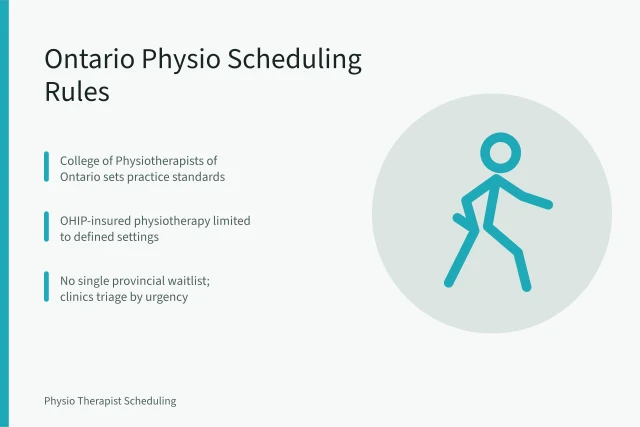
The treatment plan form is the key approval document. A missing claim number can delay the whole file. Clinics in Vancouver and Victoria often keep a separate waitlist for ICBC patients whose documents are incomplete. For a comparison with another provincial payer guide, see Ontario Physiotherapy Scheduling Rules.
How long ICBC approval takes
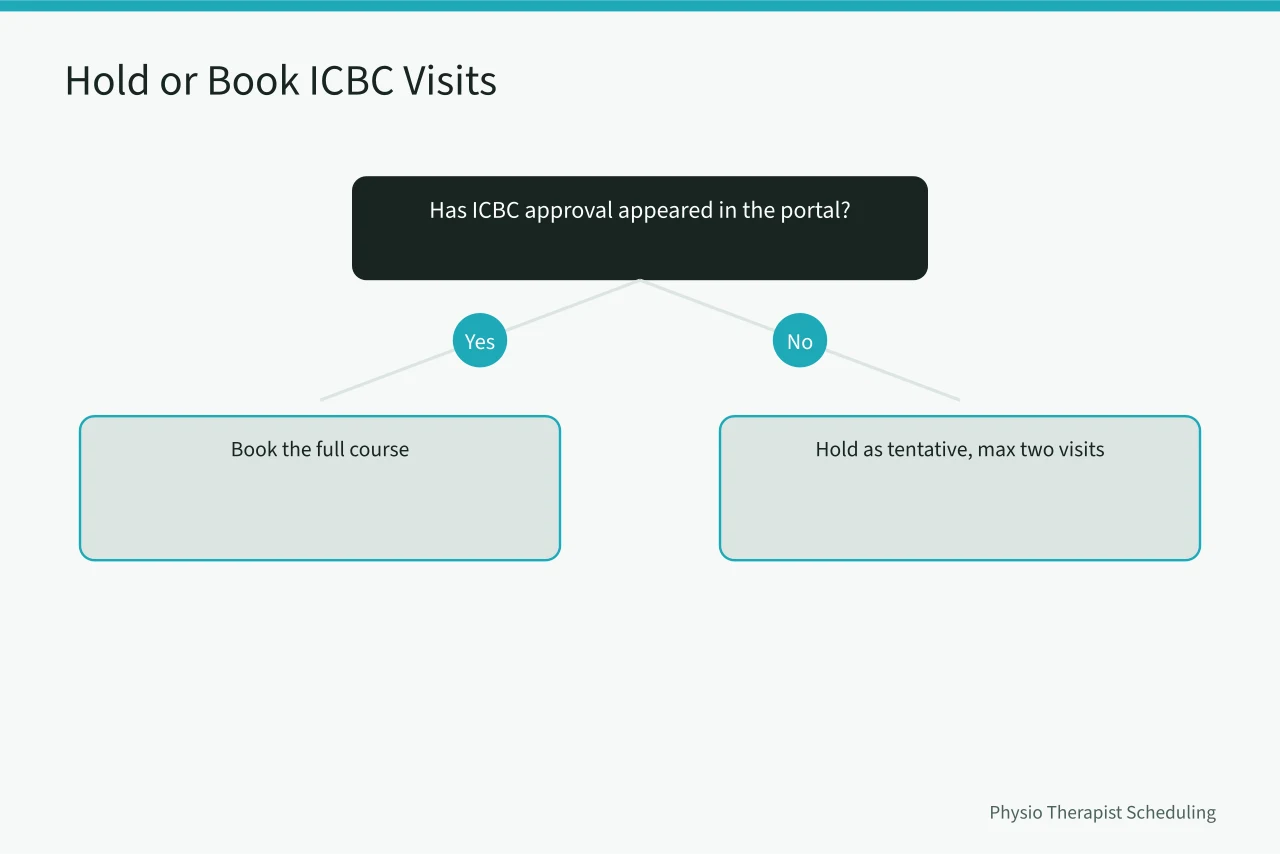
ICBC does not publish a single turnaround time for physiotherapy pre-approval. Simple treatment plans can move in days, while plans with multiple injuries or pre-existing conditions can wait for weeks. A BC clinic should hold ICBC appointments as tentative until the approval appears in the ICBC health care provider portal. Booking a full course before approval creates a schedule that may not be billable. The care itself sits inside the broad field of physical therapy, but ICBC approval is specific to accident benefits. ICBC may ask for more clinical details when a plan requests many visits or when a pre-existing condition is involved. The clinic should respond through the ICBC health care provider portal rather than by fax or phone, because the portal creates a dated record. Some clinics set a standing rule that no more than two tentative ICBC visits are booked per patient until approval arrives. Owners can track approval delays alongside other operational indicators in Physical Therapy Scheduling Metrics.
What happens if you skip ICBC pre-approval
If a clinic books and treats an ICBC patient without pre-approval, ICBC can decline the treatment plan and refuse to pay the clinic. The clinic may then need to absorb the cost or bill the patient directly, which can lead to a collection dispute and a complaint to the College of Physical Therapists of British Columbia. A missed pre-approval can also shift a patient to a private-pay waitlist without the patient knowing until after the visit.
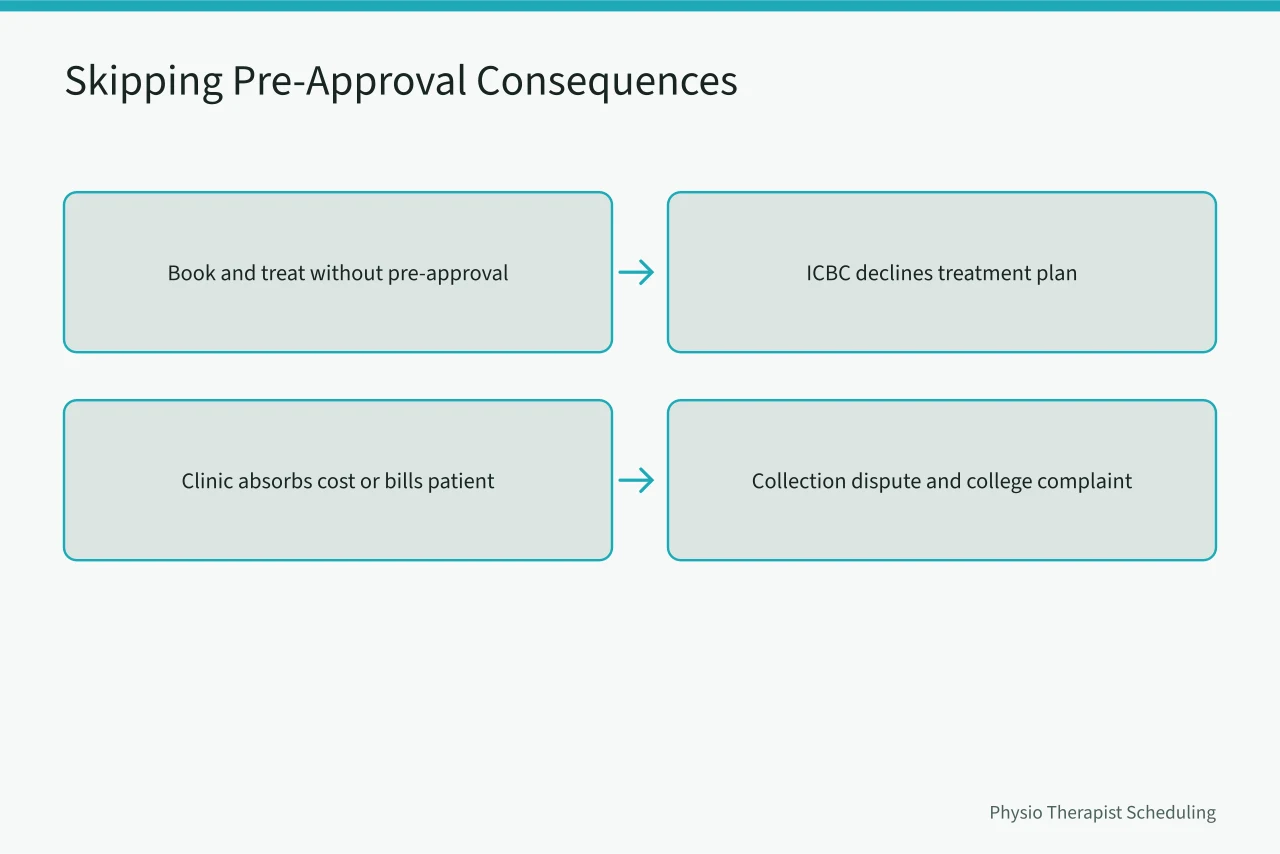
Skipping pre-approval does not just delay payment. It can turn a scheduled appointment into a dispute over who owes for the visit.
Example of an ICBC waitlist split in Vancouver and Victoria
A Victoria clinic keeps two ICBC waitlists: approved and awaiting pre-approval. Patients with approval book into reserved physiotherapy slots. Patients awaiting approval get a tentative date only after the treatment plan is submitted. A Vancouver clinic adds a separate urgent list for post-surgical ICBC patients whose adjuster has already confirmed coverage. This split prevents a full schedule of unpaid visits. Software features for tagging waitlists are common; a comparison appears in Physical Therapy Scheduling Software. The approved list moves faster, but the awaiting list keeps patients informed without giving away a reimbursable slot. Both cities need front-desk staff trained on the difference, because a tentative booking can look firm to a patient.
Common questions
Does an ICBC patient need pre-approval for the first physiotherapy visit? The initial assessment is often billable without a full treatment plan, but follow-up visits need approval. Confirm the current rule in the ICBC health care provider portal before booking the second visit.
Can a clinic bill a patient directly if ICBC denies pre-approval? Yes, the clinic can bill the patient, but the clinic must tell the patient before treatment that ICBC may not pay. Written consent avoids a later complaint.
How does a Vancouver or Victoria clinic manage waitlists without breaking ICBC rules? Keep approved visits as firm bookings and pre-approval visits as tentative slots until ICBC confirms. Document the pre-approval status on each appointment.
What is the difference between ICBC rules and municipal business licence rules? ICBC rules decide payment for treatment. Municipal rules decide where and how a clinic can operate. Private policies set cancellation and no-show handling. A clinic can follow all three sets of rules and still lose an ICBC appointment if the front desk does not record approval status. Front-desk training on these layers reduces errors, as described in Front Desk Scheduling Mistakes.