Guides
Physical Therapy Front Desk Scheduling Mistakes That Cost You Patients
Front desk scheduling mistakes physical therapy clinics make cost visits, referrals and cash. Here are the failures, their causes and the fixes.
What to take away
- Six front desk failures drive most lost visits: authorization checks done too late, referral rules treated as one national rule, no-show policies that ignore payer terms, double-booked eval slots, phone-only intake, and discharge dates never tracked.
- The most expensive one hides for a full season: authorization units quietly run out in week nine of a twelve-week plan of care.
- Prevention is cheap. A verification script, a state referral sheet and a weekly expiring-authorization report cost staff time, not software.
- Front desk training is the control point. Most errors are process gaps, not careless people.
The costly one: authorization that expires mid-plan
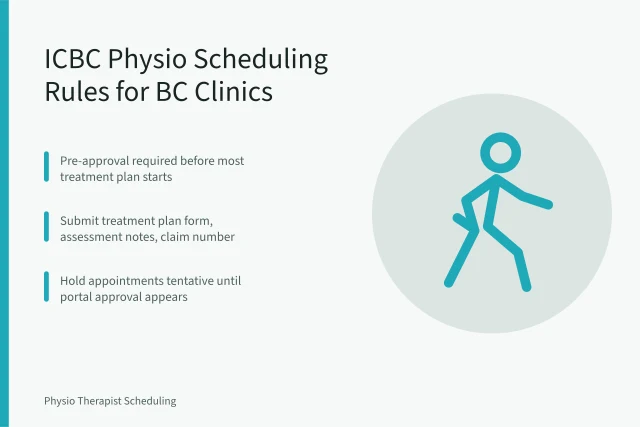
A patient starts a twelve-week plan of care in March. The front desk verifies benefits once, sees "authorized" and stops looking. In week nine the visits run out. The therapist learns at the next appointment, and the patient is standing in the lobby.
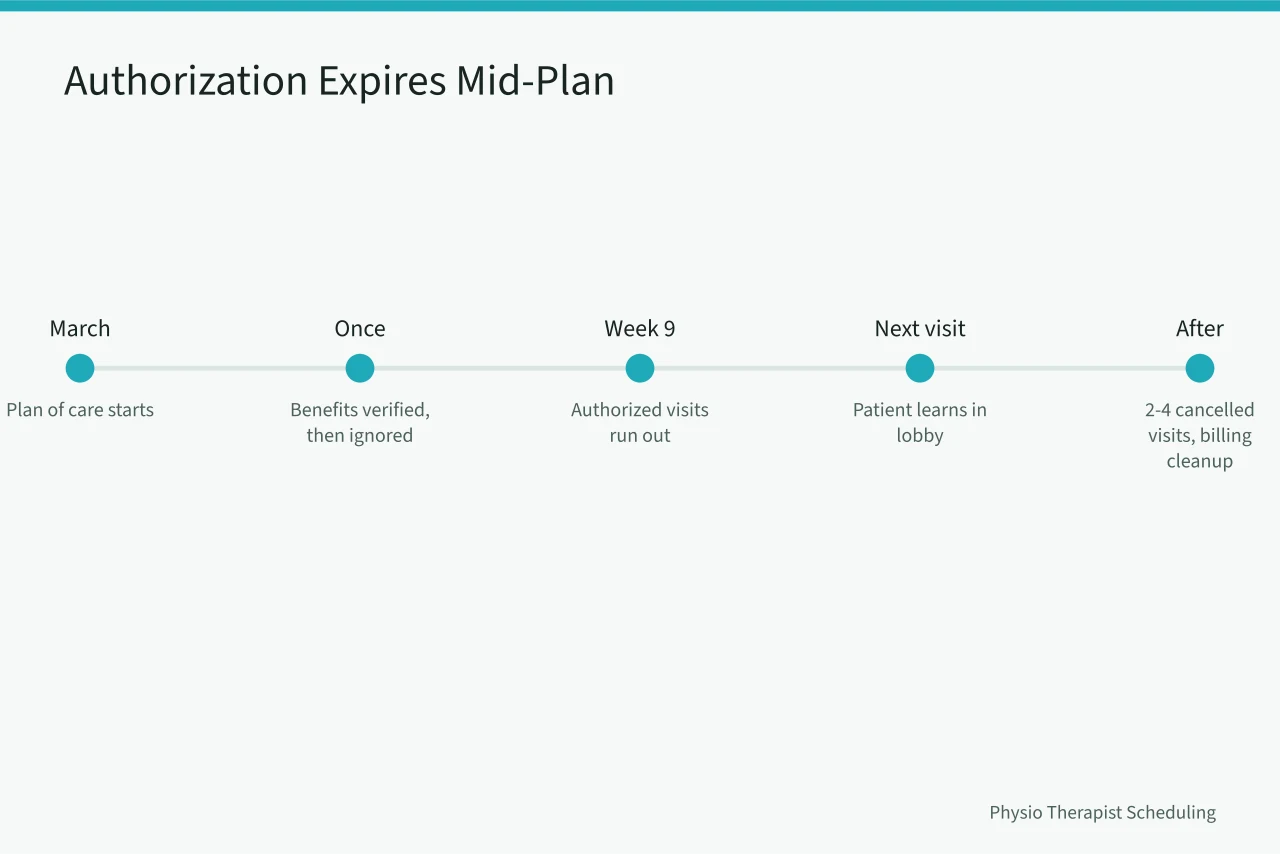
Consequence: two to four cancelled visits, a gap in care, and sometimes a cash balance the patient never agreed to. Under Medicare therapy rules, documentation and visit counting have to line up with what was billed, so the cleanup reaches the billing office too. CMS therapy services billing guidance is worth reading before you build the check.
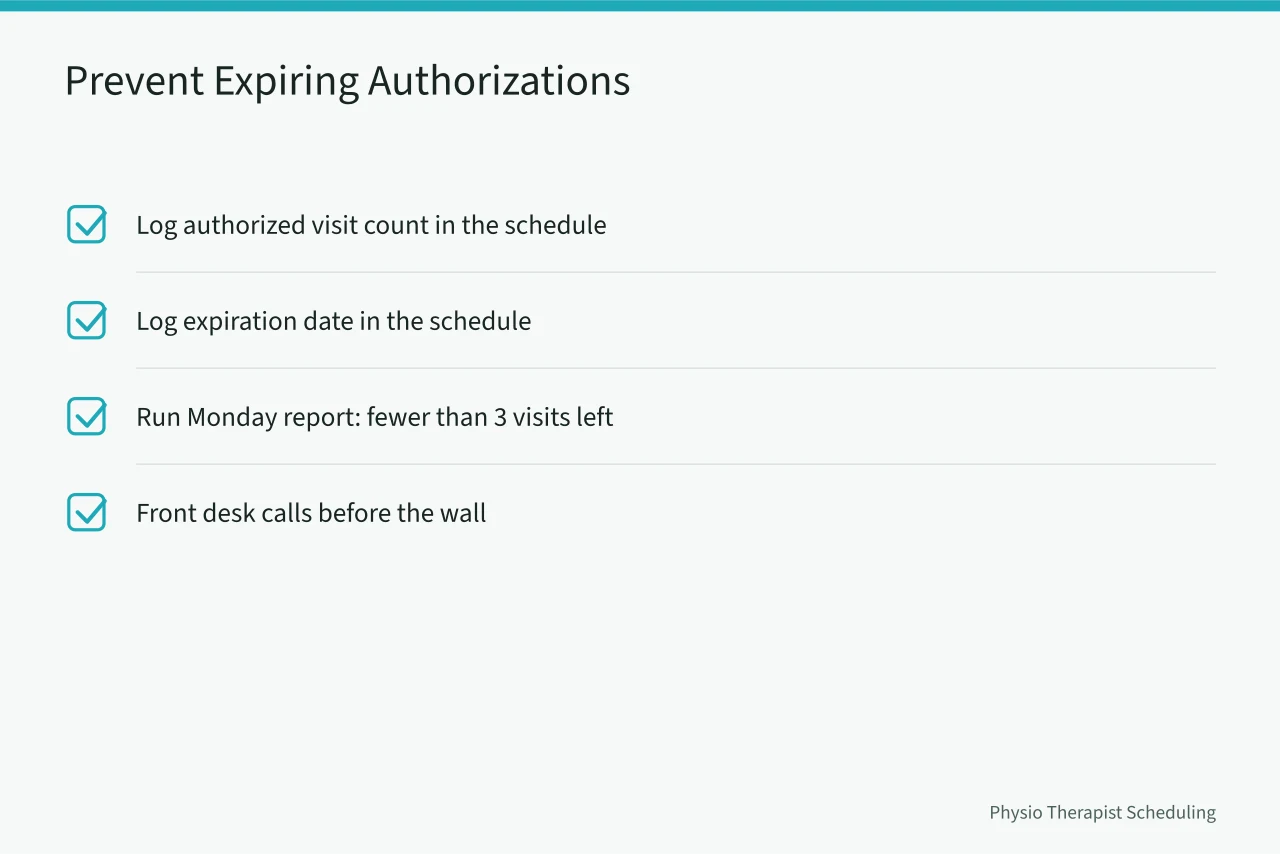
Prevention: log the authorized visit count and expiration date in the schedule itself, not a spreadsheet nobody opens. Run a Monday report of every patient with fewer than three visits left. The front desk calls before the wall, not after it.
The ones that look fine at first
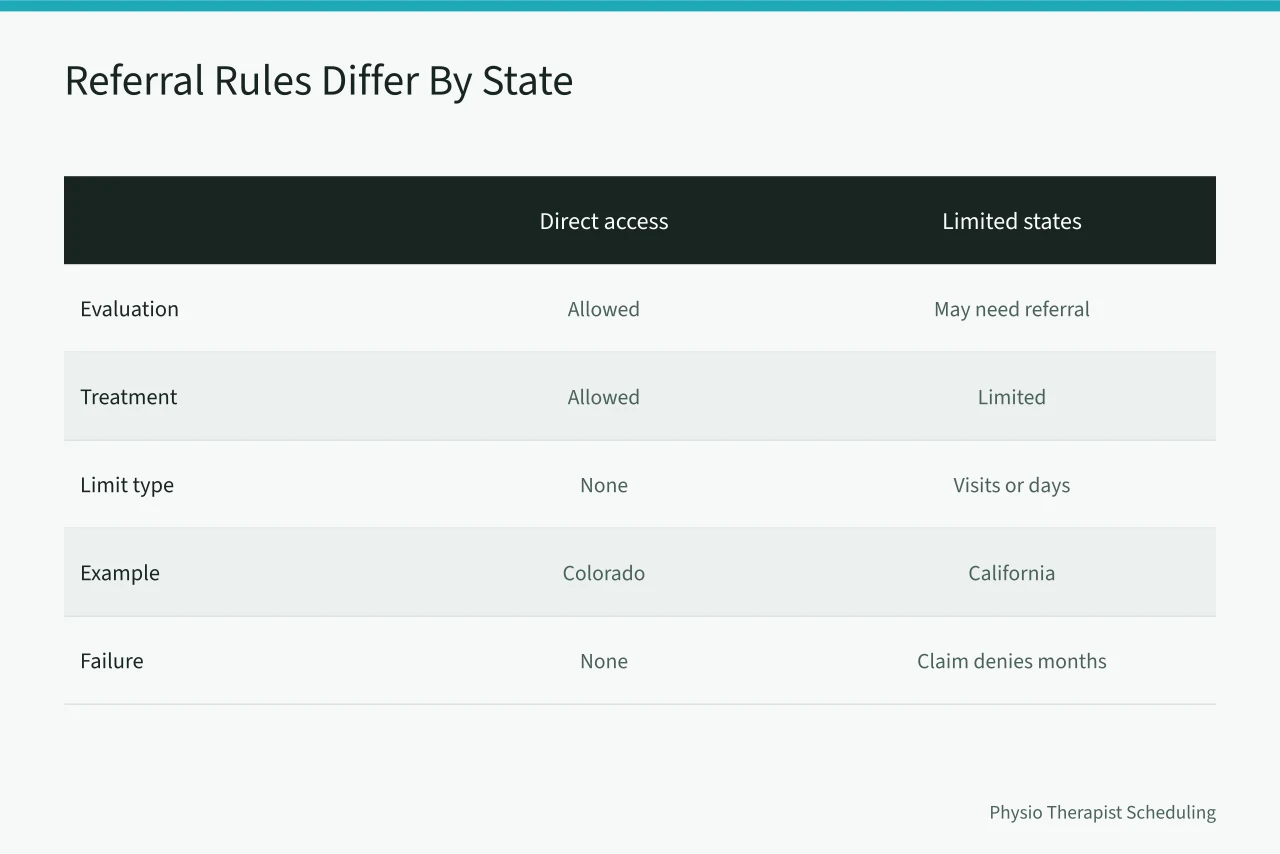
Referral rules treated as one national rule. A clinic with locations in two states applies the same intake script everywhere. Some states allow evaluation and treatment without a physician referral under direct access; others limit it by visit count or days. Colorado and California do not read alike. The failure is invisible until a claim denies months later. Prevention: one page per state, kept at the desk, listing what the front desk may book and what needs a referral first. Our guide to direct access laws in California shows how much the answer changes by state.
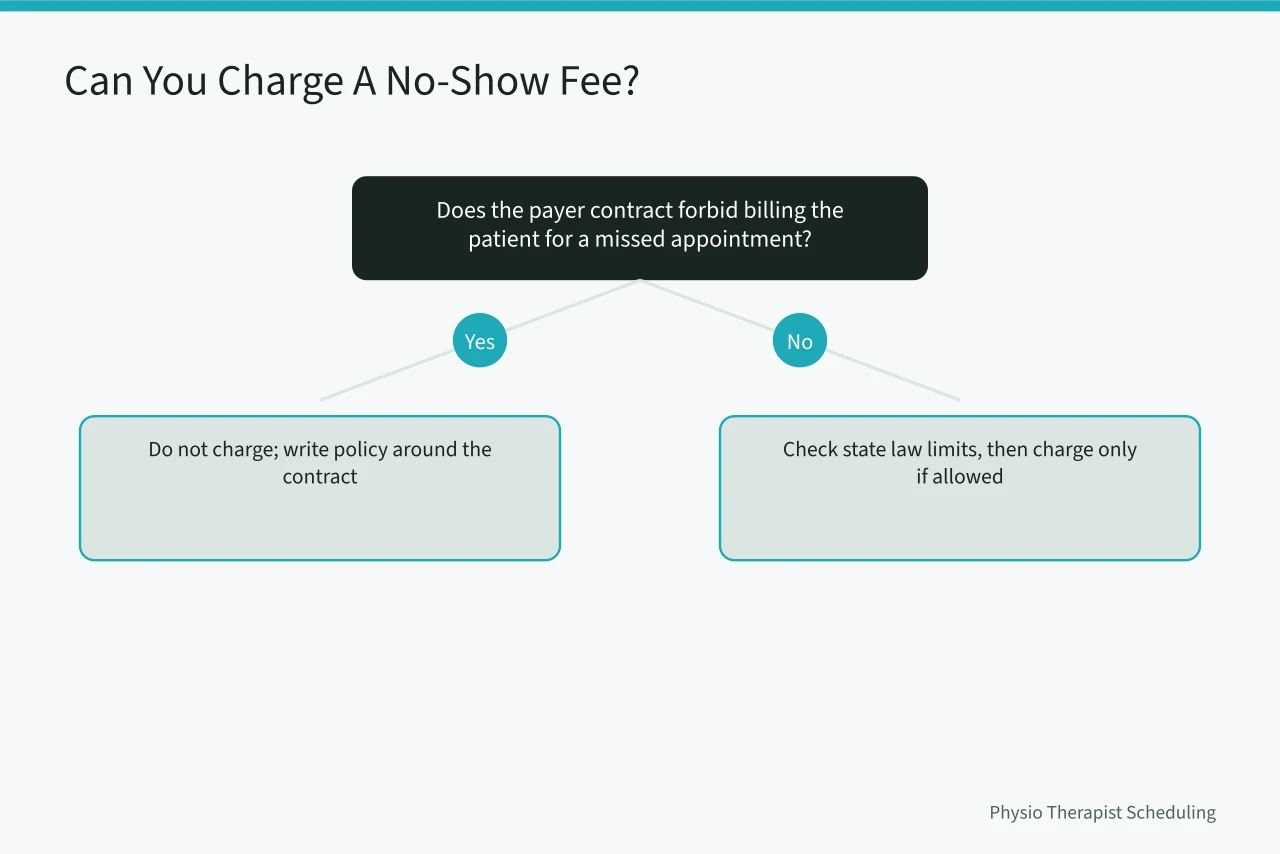
No-show policy copied from a dental office. The clinic charges $50 for a missed visit. The payer contract forbids billing the patient for a missed appointment, or state law limits it. The patient disputes, the clinic refunds, and the policy loses credibility. Prevention: read the payer contract's missed-appointment clause and write the policy around it. New York practices face a specific version of this problem, covered in no-show policies that work with insurance rules.
Double-booked evaluation slots. Two new patients land at 3:00 pm because the schedule template has one eval block. One waits 25 minutes. Consequence: a poor first impression and a therapist who cannot complete a full subjective exam. Prevention: separate eval slots in the template, and a rule that only the treating therapist can override it.
Phone-only intake. Every new patient calls the desk, and the desk is also checking people in. Calls roll to voicemail at lunch. Consequence: after-hours inquiries book with whoever answers first, often a competitor. Prevention: online self-scheduling for evaluations, with the phone kept for questions.
The ones that only show up later
Discharge dates never tracked. A patient finishes the plan of care in June. Nobody schedules the follow-up or the discharge summary. In October the patient is back with the same complaint and a new injury history. The clinic cannot show continuity because no one owns the discharge list.
That failure stays hidden for a season or more because nothing breaks. It surfaces in a referral source asking why the patient was never sent back, or in a reactivation call that reveals the patient assumed they were done.
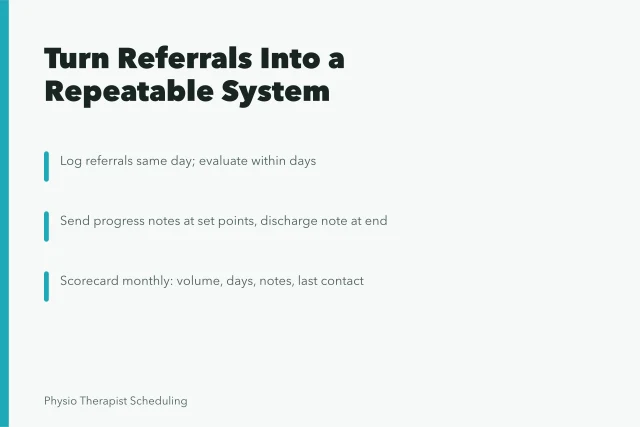
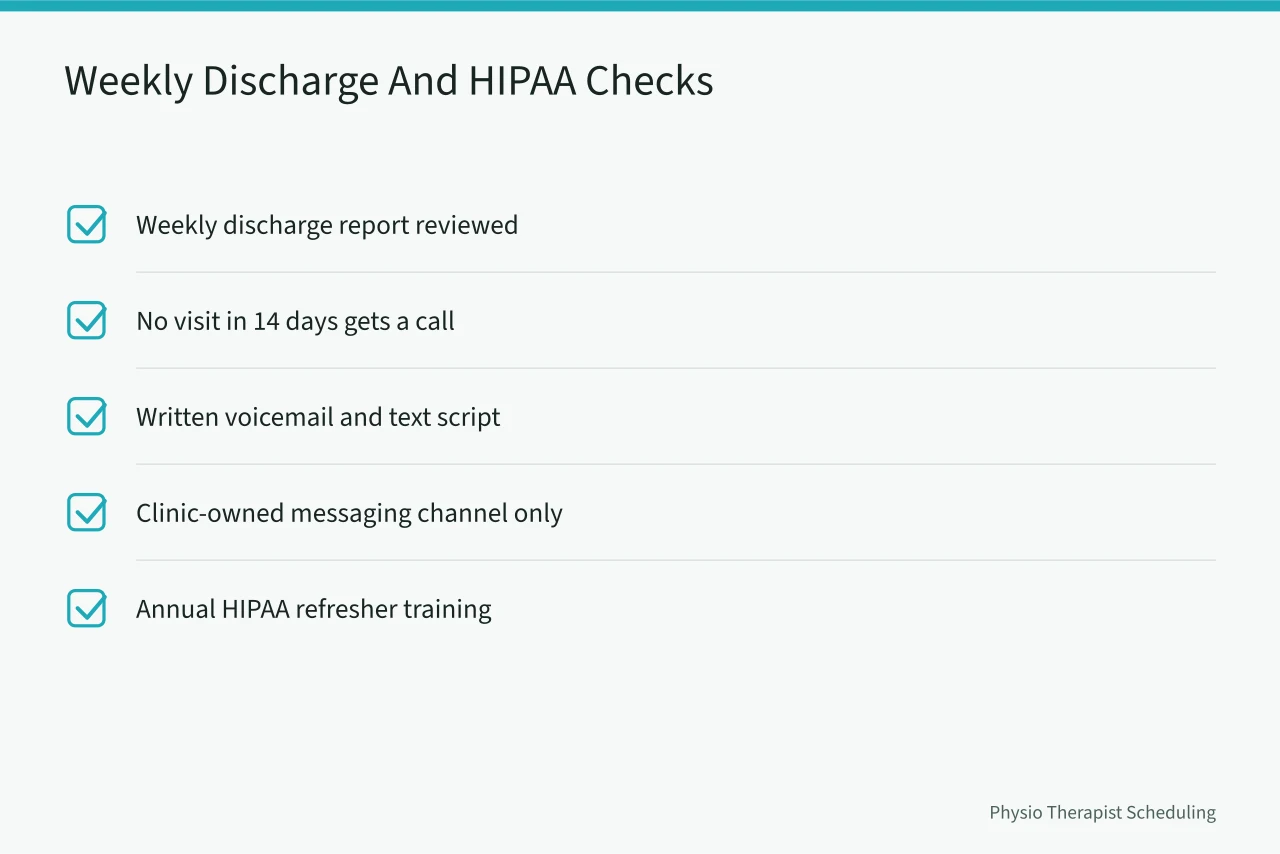
Prevention: a weekly discharge report. Any patient with no visit scheduled in 14 days gets a call. The same list feeds referral thank-you notes, which is how referrals turn into repeat business.
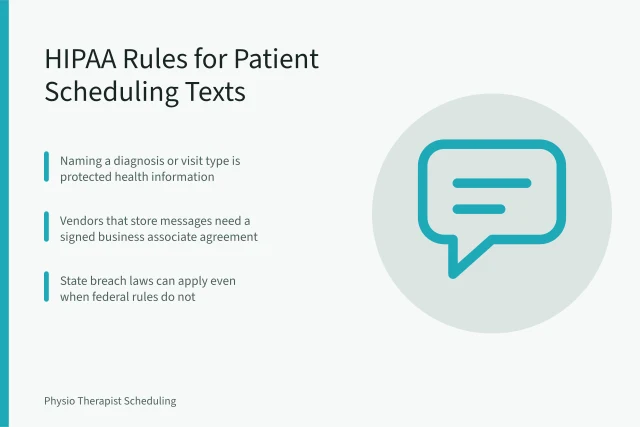
HIPAA handled by habit. The desk leaves a voicemail naming the therapist and the diagnosis, or texts appointment details from a personal phone. The Privacy Rule governs how protected health information moves in scheduling communications, and a single complaint can trigger an investigation.
Prevention: a written script for voicemails and texts, a clinic-owned messaging channel, and annual refresher training. The federal rules are summarized at the HHS HIPAA Privacy Rule page.
| Mistake | Hidden for | Prevention |
|---|---|---|
| Authorization units run out | 6 to 10 weeks | Weekly expiring-authorization report |
| State referral rule ignored | 1 to 3 months | One-page state sheet at the desk |
| No-show fee conflicts with contract | Until first dispute | Contract clause review |
| Discharge never scheduled | A season or more | Weekly 14-day no-visit report |
What they have in common
Every one of these failures lives at a handoff. The front desk owns information that the therapist and the biller need, and nobody wrote down when to pass it.
AHRQ's office-based care program treats communication breakdowns as a workflow problem rather than a character problem, and the AHRQ communication guidance for office teams applies directly to a front desk that books, verifies and reminds.
Three fixes cover most of the list:
- Write a verification script that captures visit limits, expiration dates and referral requirements.
- Build two recurring reports: expiring authorizations and patients with no visit in 14 days.
- Train the desk on state referral rules and payer no-show terms, then retest after 90 days.
- Does the schedule show authorized visits remaining?
- Does the desk know this state's referral rule?
- Is the no-show fee allowed by the payer contract?
- Is every discharge from 14 days ago scheduled or closed?
Staffing the desk correctly matters as much as the process. Overtime and exempt status questions come up fast when a small clinic covers lunch hours, and the FLSA and IRS hiring rules for front desk staff explain where the lines sit.
A scheduling error is rarely a lazy employee. It is almost always a missing report, a missing script or a rule nobody wrote down.
Common questions
How often should the front desk verify benefits? At intake and again whenever the plan of care changes or the authorization nears its limit. For Medicare patients, check visit counts weekly against the plan of care.
Can the front desk book an evaluation without a referral? It depends on the state. Some allow direct access with no referral, others cap visits or days. Keep a one-page sheet per state at the desk and update it yearly.
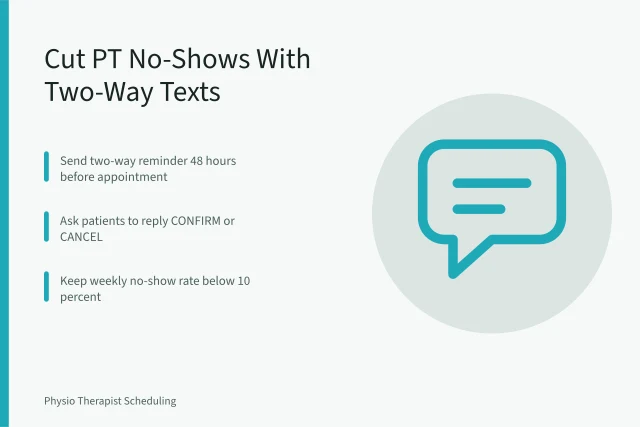
What is the fastest fix for no-shows? Reminder messages plus a discharge and no-visit report. Most clinics see improvement within one billing cycle, though the exact rate varies by payer mix and location.
Who owns the expiring-authorization report? Name one person, usually the lead front desk staffer, and give the therapist a copy. An unowned report is the same as no report.