Guides
Ontario Physiotherapy Scheduling Rules: Booking, Billing and Waitlists
Ontario physiotherapy scheduling rules set who may book, bill and hold a waitlist. This guide covers College standards, OHIP limits and clinic duties.
What to take away
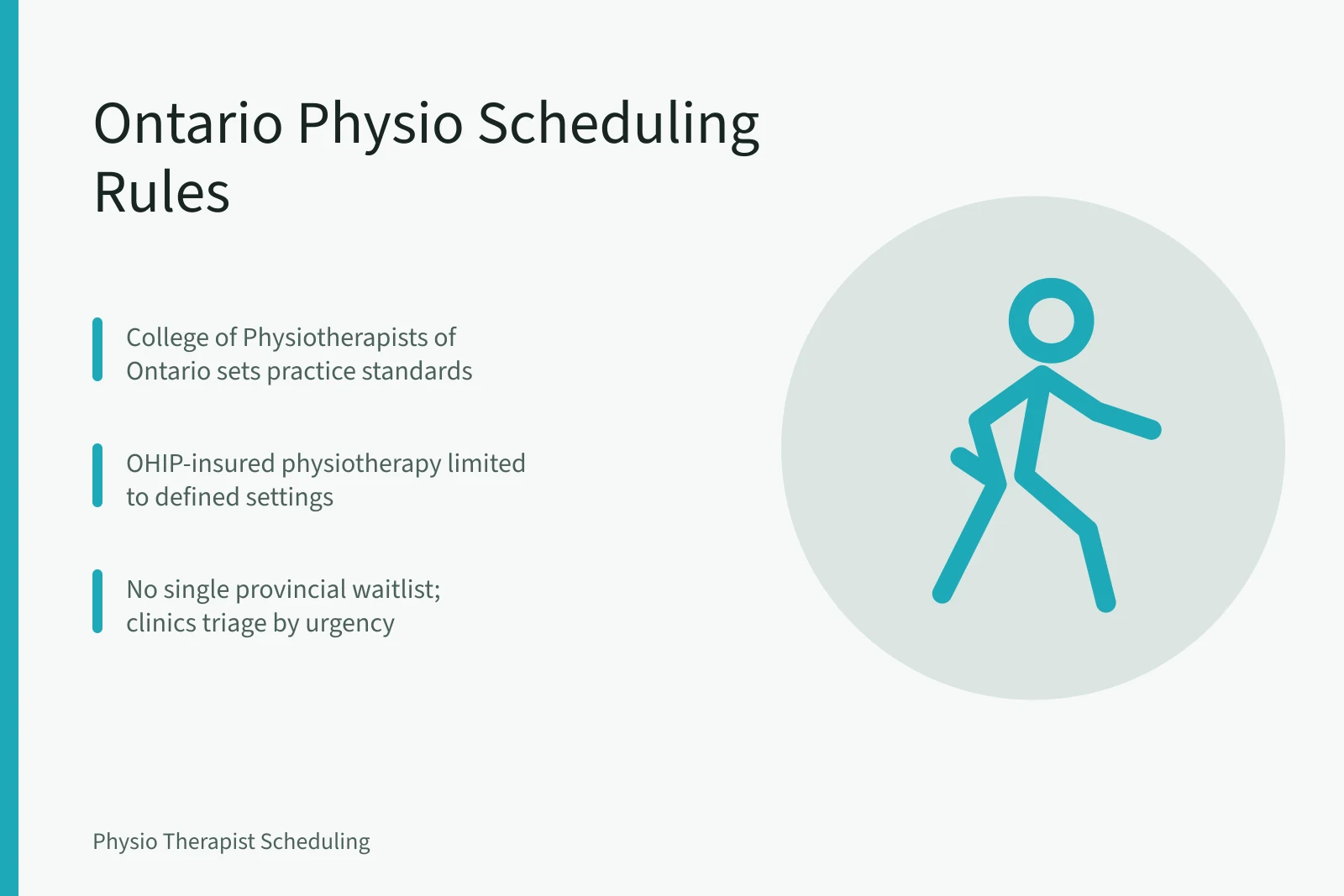
- The College of Physiotherapists of Ontario sets practice standards for consent, records and fees, and its rules apply to every clinic in the province.
- OHIP-insured physiotherapy is delivered through specific funding streams, and clinics that bill outside them must tell patients the fee before treatment.
- Waitlist practice is governed by professional standards, not by a single provincial queue, so Toronto and Ottawa clinics run their own lists.
- Skipping the rules has a concrete cost: a clinic that bills OHIP for an uninsured service can be required to repay the amount and may face a College complaint.
Who has jurisdiction
Physiotherapy regulation in Canada is provincial. In Ontario the governing statute is the Physiotherapy Act, 1991, and the College of Physiotherapists of Ontario administers it. The College registers physiotherapists, sets standards of practice and handles complaints about conduct.
Scheduling sits inside those standards rather than beside them. Consent, record keeping and fee disclosure all touch the front desk, because the person who books the appointment is often the person who explains the cost. A clinic's booking script is therefore a compliance document, not just a courtesy.
Three layers of rule meet at the desk. Professional rules come from the College. Billing rules come from the Ontario Health Insurance Act and its regulations. Private rules come from insurers and from the clinic's own fee schedule. A scheduler who knows only one layer will eventually get a booking wrong.
What triggers a College or billing obligation
A booking triggers obligations the moment a physiotherapist accepts a patient for assessment or treatment. Consent to treatment, consent to share information with an insurer, and disclosure of fees are separate conversations.
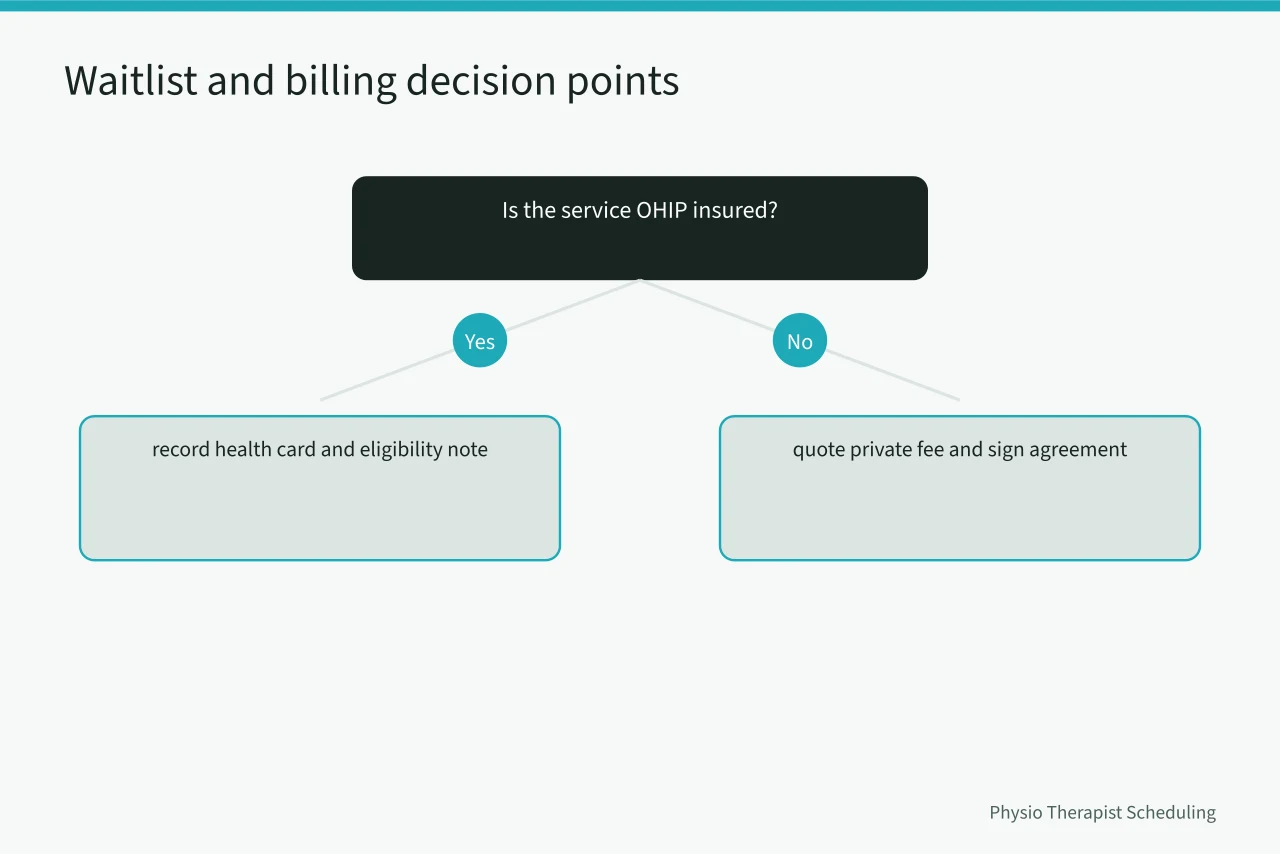
Billing obligations attach to the type of service and the payer. OHIP-insured physiotherapy is limited to defined settings and patient groups. Services outside that envelope are private, and the clinic must quote the fee before the visit.
A clinic that treats an OHIP patient as a private patient, or the reverse, is not making a clerical error. It is billing the wrong payer.
What to collect before the first visit
The front desk needs a defined intake set. Missing documents push the first appointment into a second visit and consume a treatment slot.
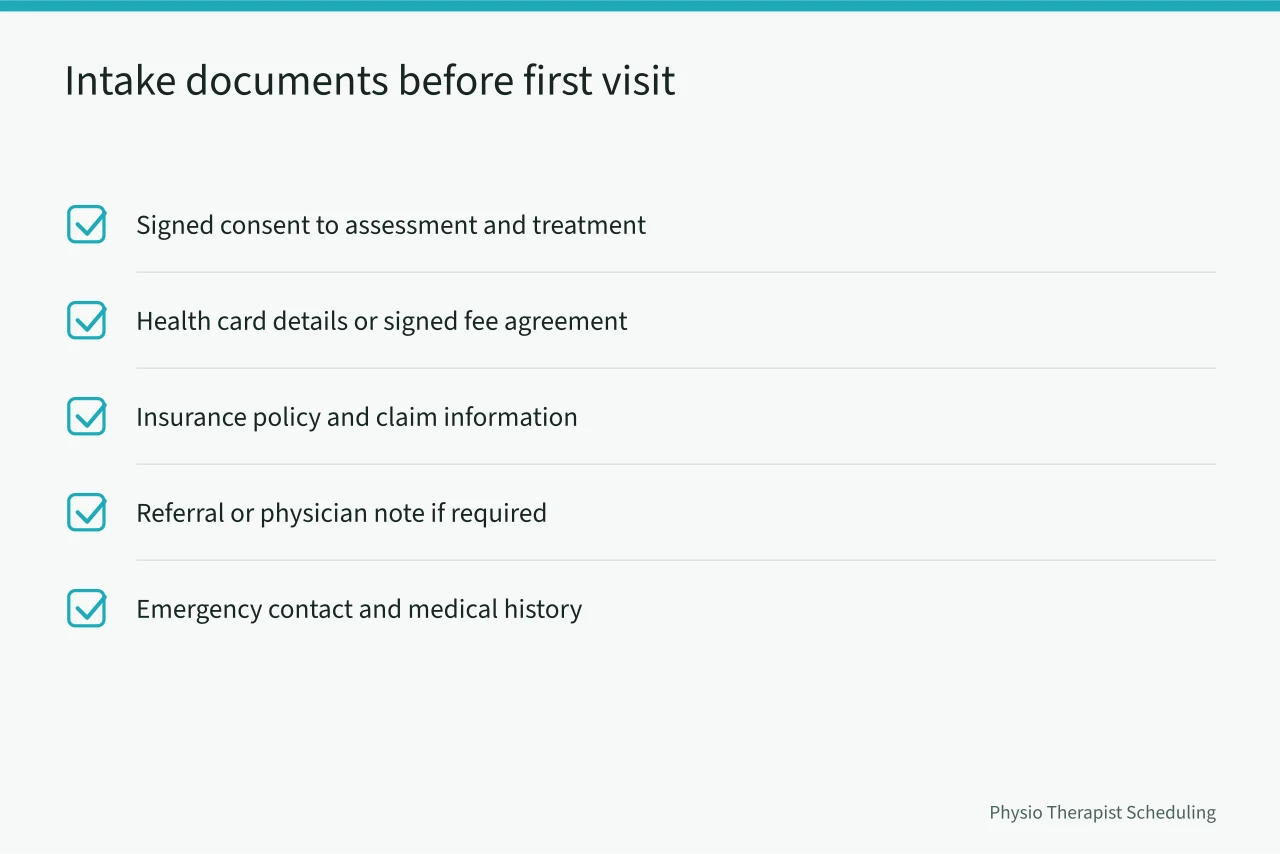
- Signed consent to assessment and treatment
- Health card details for insured services, or a signed private fee agreement
- Insurance policy and claim information where a third party pays
- Referral or physician note where the funding stream requires one
- Emergency contact and relevant medical history
A written intake checklist keeps these items from being gathered at the chair. For a general model of what new staff must know, see the physical therapy employee training checklist.
How approval and waitlists work
There is no single provincial waitlist for physiotherapy. Clinics maintain their own lists, and hospitals and community providers maintain theirs. The College expects a list to be managed fairly and transparently, which means a stated priority rule rather than a first-come queue in a notebook.
In Toronto and Ottawa, demand for publicly funded physiotherapy exceeds supply at many sites, so clinics triage by urgency and by funding eligibility. A patient who is told "six to eight weeks" should also be told what would move them up the list.
The College's standards sit alongside the legal framework in the Ontario Physiotherapy Act statute. Billing for insured services is governed separately under the Ontario Health Insurance Act.
| Decision point | Who decides | Record needed |
|---|---|---|
| Is the service OHIP insured | Clinic, against funding criteria | Health card and eligibility note |
| Is a referral required | Funding stream and clinic policy | Referral on file |
| What fee applies privately | Clinic fee schedule | Signed fee agreement |
| Where the patient sits on a waitlist | Clinic triage rule | Dated triage note |
Example: a missed billing rule
A patient books for a knee program and holds a valid health card. The clinic assumes OHIP covers the course and treats for six weeks without a fee discussion. An audit later finds the service was not an insured benefit for that patient.
The clinic must repay the amount billed and explain the gap to the patient. The College complaint that follows is about consent and fee disclosure, not about clinical care. The fix was one question at the first booking.
Common questions
Does the College set physiotherapy fees? No. The College sets standards of practice and conduct. It does not set a fee schedule, so clinics publish their own private rates and must disclose them before treatment.
Can a clinic refuse to add a patient to a waitlist? A clinic can decline to accept a patient, but it should apply a stated policy rather than an ad hoc decision. The reason and the date belong in the record.
Are Ontario billing codes the same as in other provinces? No. Each province runs its own insured services framework and its own codes. A code that pays in Ontario may not exist elsewhere, so staff who move between provinces need retraining.
What happens if a clinic skips the rules? The clinic can be required to repay amounts billed incorrectly, and the physiotherapist can face a College complaint over consent or fee disclosure. Both outcomes start with a scheduling decision.