Guides
How to Reduce Physical Therapy No-Shows Without Overbooking
How to reduce physical therapy no-shows with TCPA-compliant texts, two-way confirmations, and fee policies. Track weekly rates and act before overbooking.
What to take away
- Automated text reminders with two-way confirmations reduce physical therapy no-show rates more reliably than overbooking.
- A no-show policy needs written consent for text messages and a fee structure that follows state law.
- Track weekly no-show rate and message delivery rate. Act when delivery falls or no-response patients stay silent.
- Manual calls remain the named recovery when automated reminders fail.
Before the first reminder goes out
A no-show is not just a missed visit. It is a gap between the appointment and the patient's next contact. A clinic needs four things before any reminder sequence runs. Accurate mobile numbers, documented text consent under TCPA and state telehealth consent rules, a written cancellation policy template, and a front desk script for manual follow-up. A written cancellation policy template is part of that foundation. Keep the consent record in the same system that sends reminders, not in a paper folder.
The sequence that reduces missed appointments physical therapy
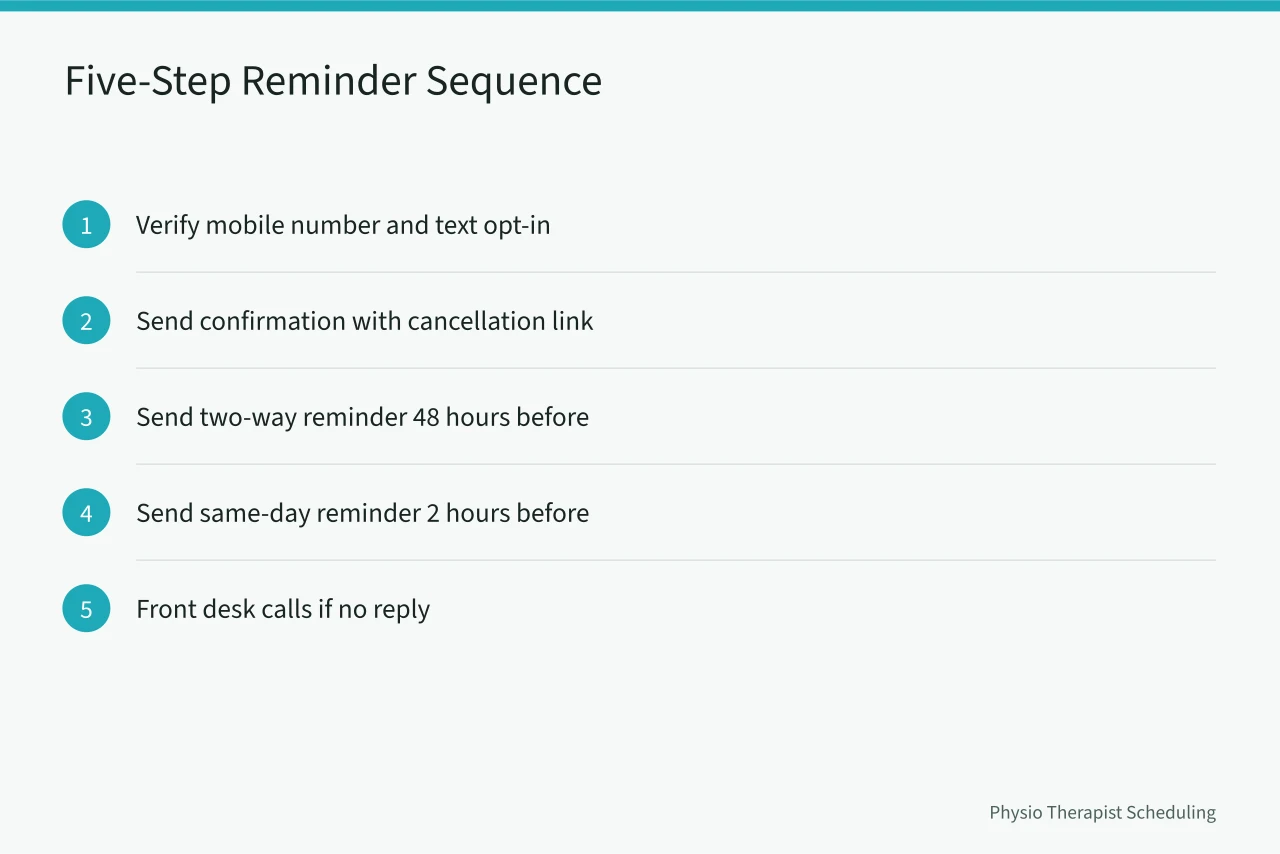
- At checkout, verify the patient's mobile number and text opt-in. Record consent language in the patient record.
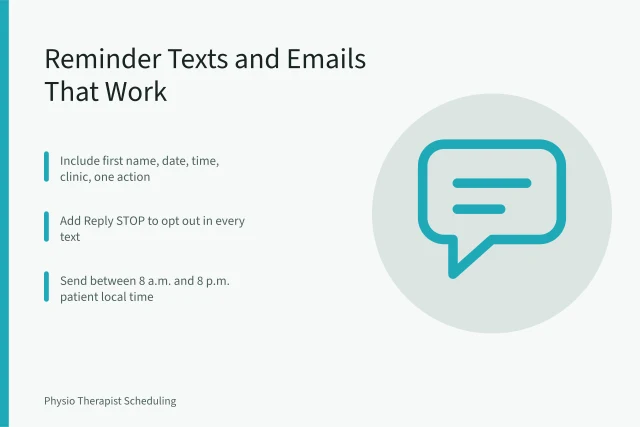
- Send an appointment confirmation immediately after booking. Include date, time, clinician, and a cancellation link. Use HIPAA-compliant scheduling software that logs the message and the patient's reply.
- Send a two-way reminder 48 hours before the appointment. Ask the patient to reply CONFIRM or CANCEL.
- Send a same-day reminder two hours before the appointment only if the patient has not confirmed.
- If both reminders go unanswered, have the front desk call the patient once before the appointment. Document the call outcome.
Step 3 is not a courtesy. It is the step that decides the result. A reply turns silent uncertainty into a scheduled or rebooked slot. No reply triggers step 5, which prevents a quiet no-show from becoming an after-the-fact surprise. This sequence does not overbook. It replaces blind gaps with a finite set of contacts.
The step that decides the result
The step that decides the result is the two-way confirmation reply. When a patient texts CONFIRM, the appointment becomes a firm commitment. When a patient texts CANCEL, the front desk can rebook from a waitlist instead of losing the slot. When a patient does not reply, the manual call becomes the second chance. Without step 3, every other reminder is just a notification. With step 3, the clinic knows which patients need a human follow-up.
How to check each step came out right
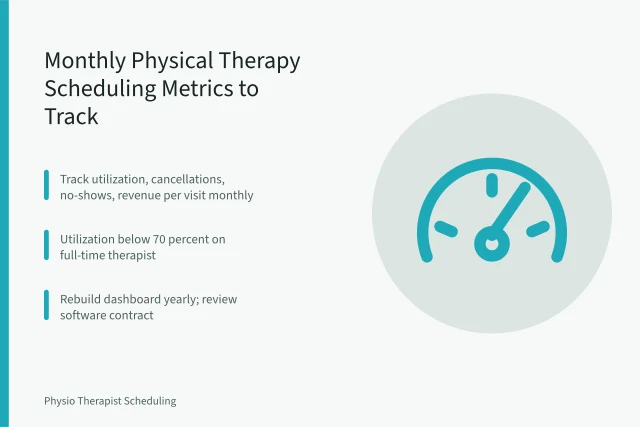
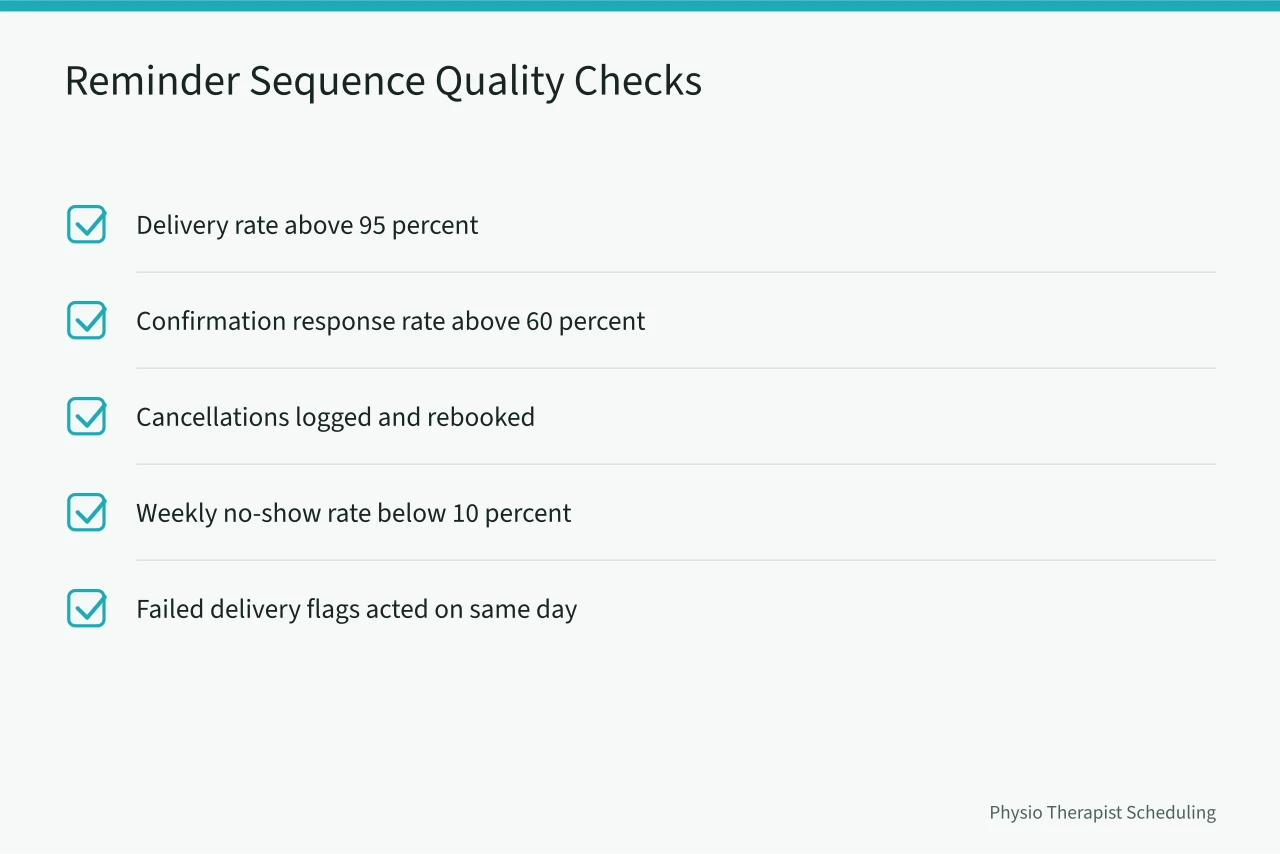
- Message delivery rate over the last 100 reminders is above 95 percent.
- Confirmation response rate for step 3 is above 60 percent.
- Cancellation requests from the reminder link are logged and rebooked before the appointment time.
- Weekly no-show rate stays below 10 percent after two reminder cycles.
- Front desk staff can see a failed delivery flag and act on it same day.
Under the HIPAA Privacy Rule, a reminder should include only the minimum protected health information needed. Keep a delivery log and a response log in one report. If the delivery rate falls below 95 percent, check the phone numbers before changing the message. If message logs are scattered across multiple apps, compare Physical Therapy Scheduling Software features before adding another tool.
No-show fees follow state law
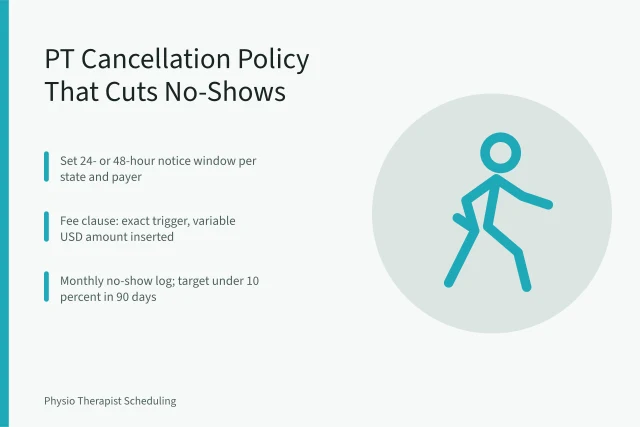
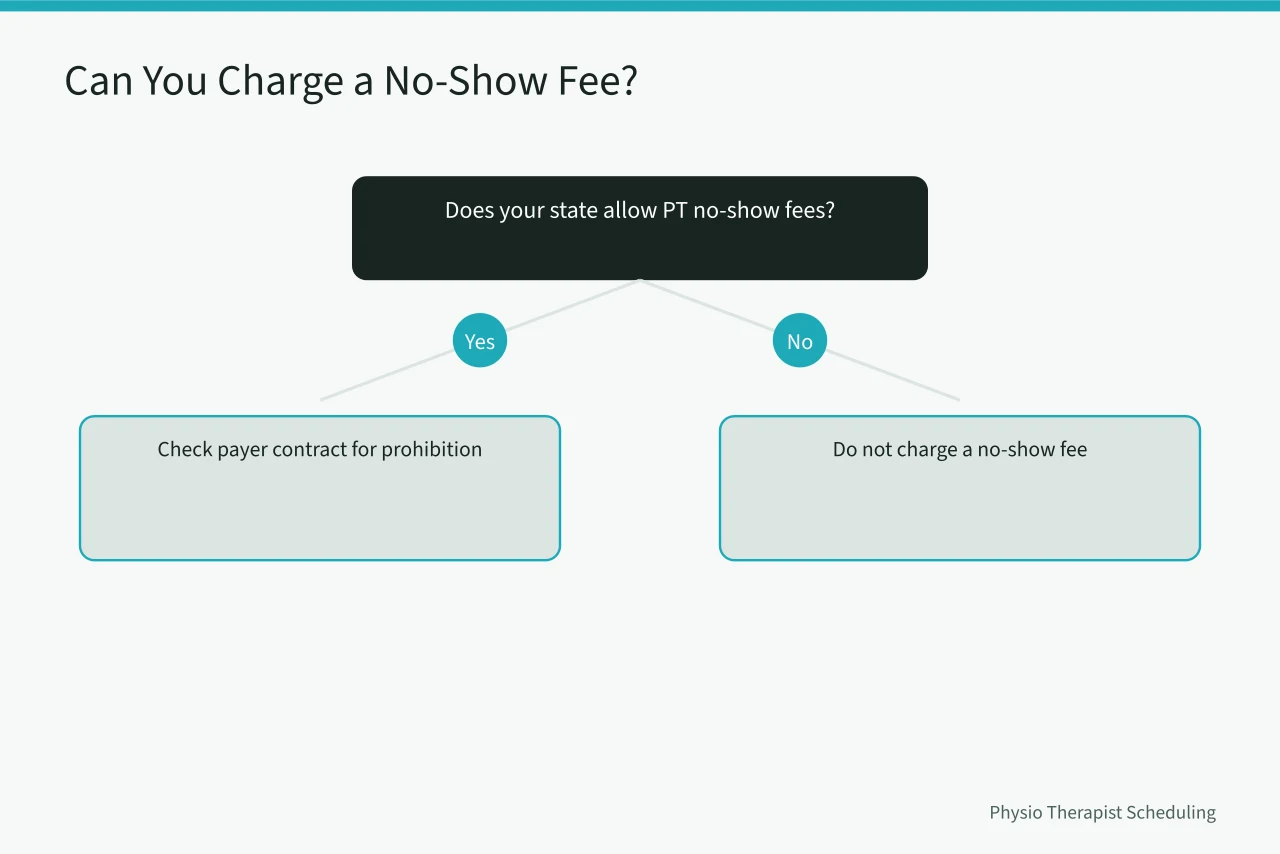
A no-show fee is not a price you set once and apply everywhere. State practice acts and payer contracts vary. New York physical therapy no-show policies show how one state's rules differ from another's. Before charging any fee, confirm that your state allows it for physical therapy and that each payer contract does not prohibit it. Put the fee amount and the required notice period in your written policy. Do not use the fee as a revenue source. Use it only as a consequence for a missed slot that the patient could have cancelled.
When a step goes wrong
The most common failure is a patient who ignores all text reminders and the manual call goes to voicemail. The named recovery is to mark the appointment as unconfirmed, leave a brief voicemail with the office callback number, and document the attempt. Then apply the written no-show policy consistently. Do not add more text messages after two ignored ones. AHRQ communication guidance for office-based care notes that front desk coordination failures often appear as missed appointment notifications, so route failed delivery flags to a single owner each day.
A silent no-show is not a scheduling problem. It is a consent and contact problem that has already been ignored.
If a patient disputes a no-show fee, review the message log with them. Show the confirmation, the two reminders, and the manual call attempt. Most disputes end when the patient sees the contact trail. If the patient never received the messages because of a wrong number, waive the fee once and update the record.
When to stop and hand it to a professional
Stop adjusting internally when the weekly no-show rate stays above 15 percent for two consecutive reminder cycles after the manual call step, or when more than 30 percent of patients say they never received any reminder. At that point, bring in a healthcare operations consultant or a compliance attorney who can audit the consent language, the phone number capture, and the software delivery logs. Continuing to tweak message wording or add more reminders wastes clinic time and will not fix a broken data or consent process.
Common questions
What physical therapy no-show rate is normal? Many outpatient clinics see 10 to 20 percent no-shows, but your baseline is the number that matters. Track your own weekly rate and react when it rises above your usual range.
Are text reminders legal for physical therapy patients in the US? Yes, if you have written consent that meets TCPA and state telehealth consent rules, and you apply HIPAA minimum necessary when the text includes protected health information.
Can I charge a no-show fee in every state? No. State law and payer contracts differ. A fee that is allowed in one state may be prohibited or limited in another, so check your state practice act and each payer contract before charging.
Do automated reminders replace phone calls? No. Automated reminders handle routine confirmations, but a manual call is still needed for high-risk patients, failed deliveries, or no-response cases.