Guides
Can Physiotherapy Clinics in Canada Charge No-Show Fees?
Physiotherapy cancellation fee rules Canada vary by province with no national standard. Here is when a clinic may charge and what happens if it does.
What to take away
- No federal law in Canada bans or permits physiotherapy no-show fees. The rule comes from provincial consumer protection legislation and the college that licenses the physiotherapist.
- Ontario and British Columbia both restrict charging for services that were never delivered, so a blanket no-show fee is risky in both provinces.
- Alberta has no physiotherapy-specific ban, but a fee must be disclosed before the appointment and must reflect a real cost the clinic absorbed.
- A fee charged without prior written consent is the most common trigger for a consumer complaint and a college inquiry.
- Insured services add a second layer: you cannot bill a provincial plan for a visit that did not happen.
Who has jurisdiction over a cancellation fee
Three separate authorities can touch a no-show fee, and they do not always agree.
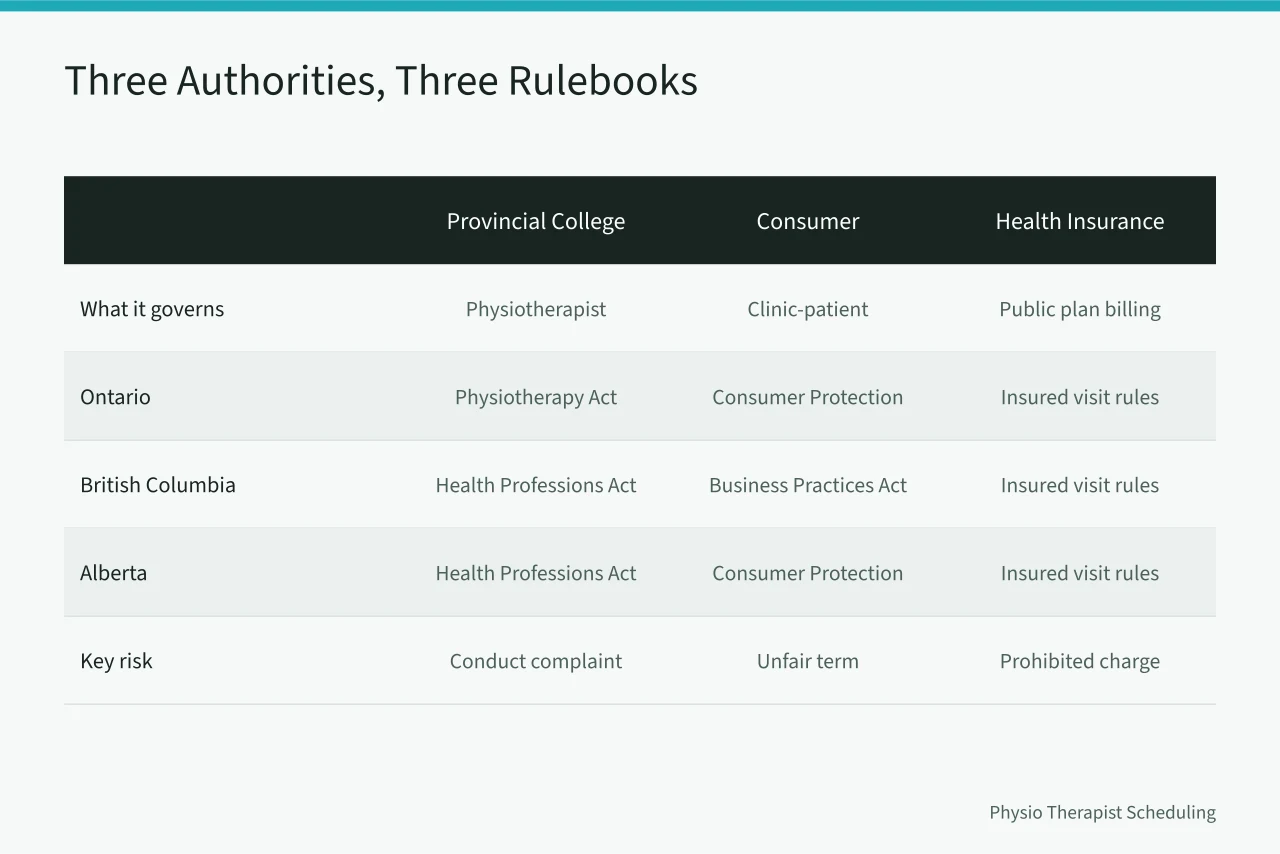
The provincial college sets the conduct rules for licensed physiotherapists. The provincial consumer protection statute governs the contract between clinic and patient. The health insurance statute governs anything billed to the public plan. A fee that satisfies one authority can still fail another.
In Ontario, the Physiotherapy Act and its regulation set the practice framework, while the Consumer Protection Act governs unfair terms in a service contract. In British Columbia, the Health Professions Act and the Business Practices and Consumer Protection Act apply in parallel. Alberta relies on the Health Professions Act plus its consumer protection legislation.
A clinic cannot contract around a statute. A signed intake form does not make a prohibited charge lawful.
What triggers a permitted fee
A fee is most defensible when the clinic can point to a specific loss. That means a reserved treatment slot, a staff member paid for that hour, and no patient.
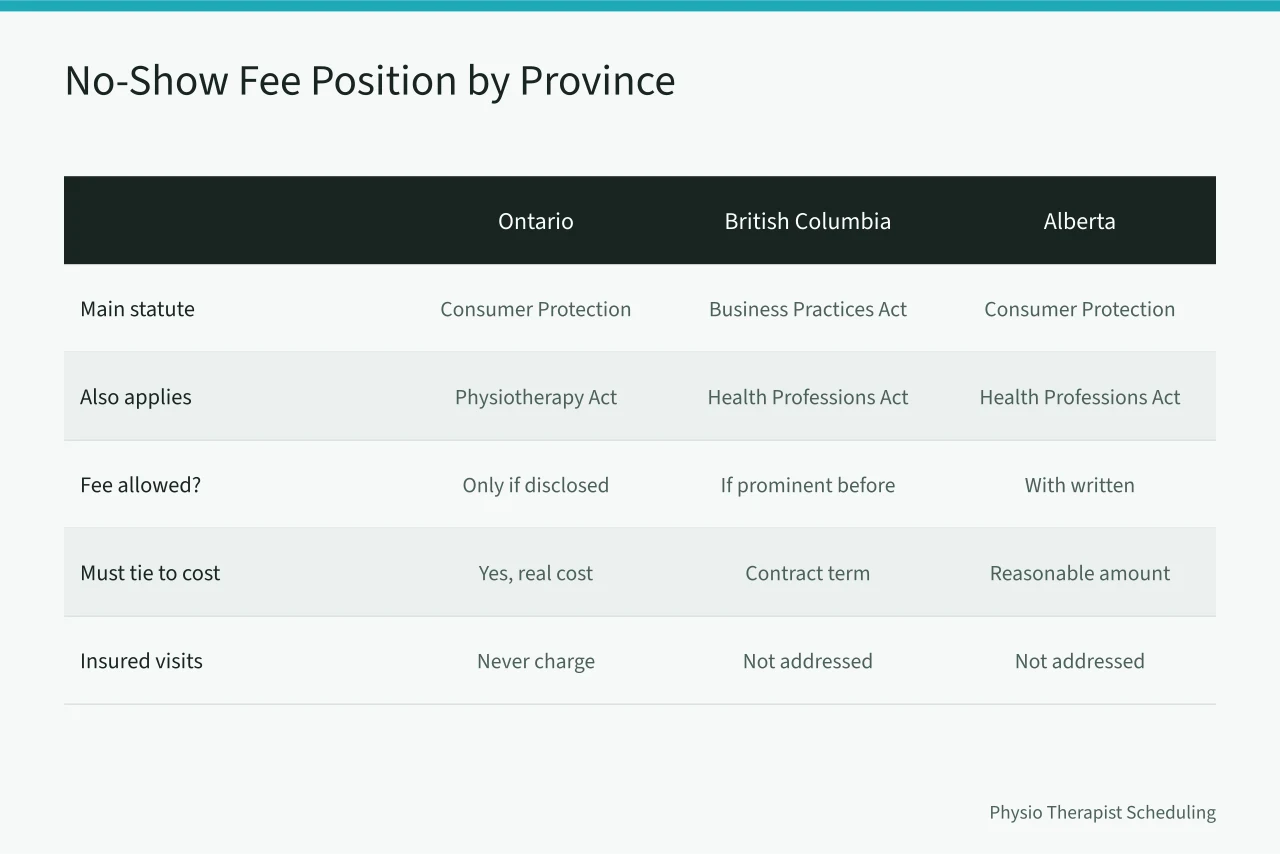
| Province | Main statute in play | Practical position on a no-show fee |
|---|---|---|
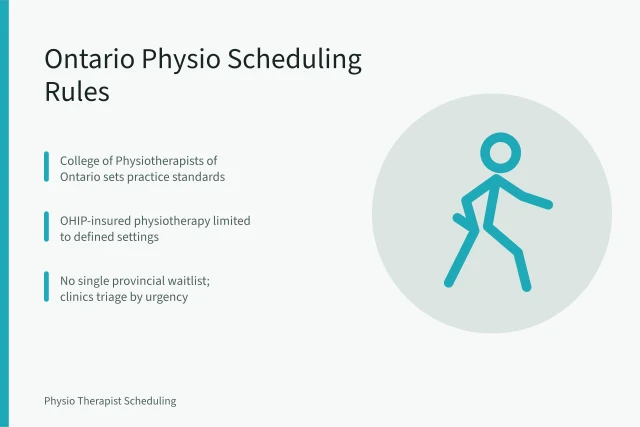
| Ontario | Consumer Protection Act; Physiotherapy Act | Allowed only if clearly disclosed and tied to a real cost, and never for an insured visit |
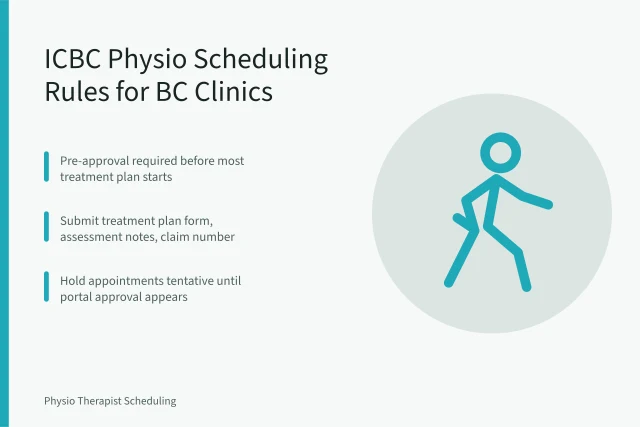
| British Columbia | Business Practices and Consumer Protection Act | Treated as a contract term that must be prominent before booking |
| Alberta | Consumer Protection Act; Health Professions Act | Permitted with advance written disclosure and a reasonable amount |
The pattern is consistent. Disclosure before the appointment, a stated amount, and a link to an actual loss carry the most weight. A surprise charge on a credit card after the fact carries the least.
What to put in the written policy
A workable policy is short and specific. It states the notice period, the amount, when the fee is waived, and how the patient agrees to it.
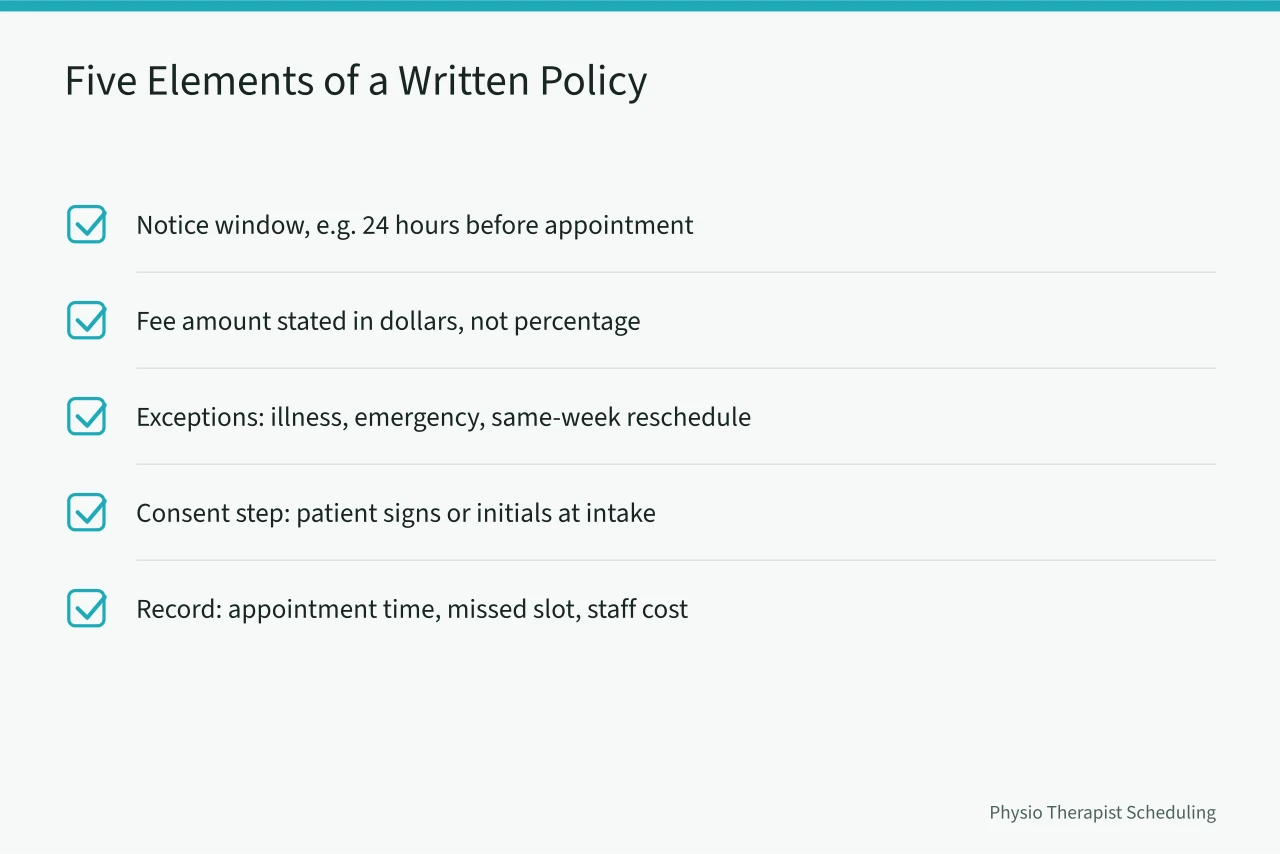
- The notice window, for example 24 hours before the appointment.
- The fee amount, stated in dollars, not as a vague percentage.
- The exceptions, such as illness, a family emergency or a rescheduled visit within the same week.
- The consent step, where the patient signs or initials the policy at intake.
- The record, showing the appointment time, the missed slot and the staff cost.
Clinics that handle this well often borrow the structure used in New York physical therapy no-show policies that work with insurance rules, then adjust it to provincial law rather than copying it.
How approval and enforcement actually work
There is no permit to apply for. The "approval" is retrospective: a complaint, an audit or a chargeback.
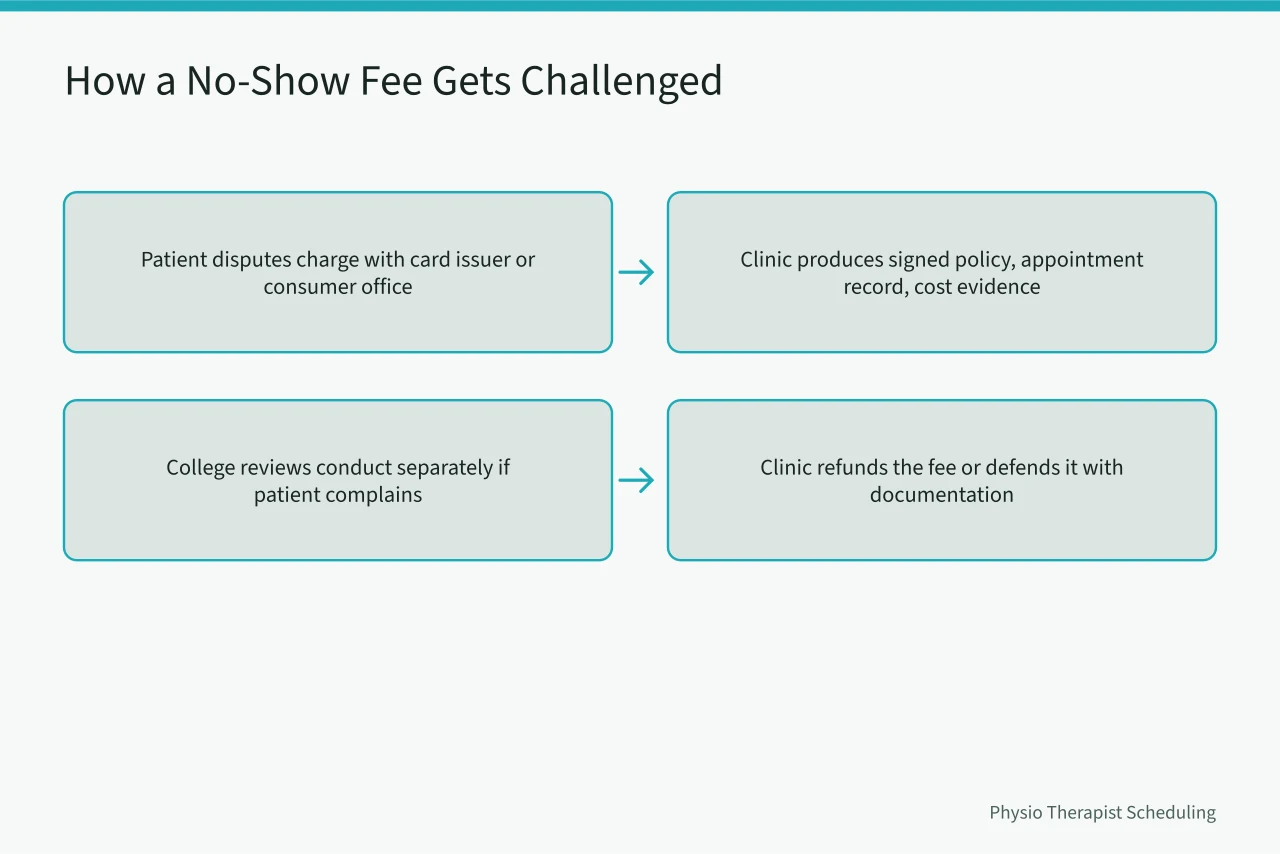
- A patient disputes the charge with their credit card issuer or the provincial consumer protection office.
- The clinic must produce the signed policy, the appointment record and evidence of the cost.
- If the patient is also a college complainant, the regulator reviews the conduct separately from the money.
- The clinic either refunds the fee or defends it with documentation.
What happens if you skip disclosure
The concrete consequence is a refund plus a complaint file. A chargeback costs the clinic the fee, a dispute fee from the processor, and staff time spent assembling records. In Ontario and British Columbia, an undisclosed term can also be found unfair, which voids the charge entirely.
A college complaint is slower and more expensive. The physiotherapist named in it answers to the regulator, and the file can follow them to a new employer. Clinics that want to avoid this often build the policy into the intake workflow described in Ontario physiotherapy scheduling rules: booking, billing and waitlists, where consent is captured at the first contact rather than at the missed visit.
Where the fee interacts with insurance
If the visit would have been billed to a provincial health plan, there is no service to bill and no fee to attach to it. The same logic applies to extended health insurers. Most will not pay a no-show charge, and some prohibit passing it to the member.
That leaves the patient paying personally, which is exactly why the disclosure has to come first. Clinics that mix insured and private visits need two policies, not one. For the general framework behind documentation and consent, the Ontario regulation under the Physiotherapy Act is the primary source to read.
Common questions
Can a clinic in Ontario charge a no-show fee? Only if the term was disclosed before booking and reflects a genuine cost. It cannot apply to a visit that would have been billed to the provincial plan.
Does British Columbia allow physiotherapy cancellation fees? The province does not ban them outright, but the term must be prominent and agreed before the appointment. A fee added after the fact is vulnerable to a consumer complaint.
What makes an Alberta no-show fee enforceable? Advance written disclosure, a reasonable dollar amount and a record showing the lost slot. Without the record, the clinic struggles to justify the charge.
What happens if a patient refuses to pay? The clinic can pursue it as a debt, but the cost of doing so usually exceeds the fee. Most practices waive the first one and document it, as covered in how to reduce physical therapy no-shows without overbooking.
For the wider booking context, see appointment scheduling software and the Ontario Health Insurance Act.
A clinic that wants a defensible policy should treat it as a contract question first and a scheduling question second. The provinces differ, the colleges differ, and the only safe ground is disclosure before the booking, not after the miss.