Guides
Washington State Physical Therapy Scheduling: Insurance Rules and Self-Booking
How Washington direct access, payer verification, Medicare thresholds, and visit caps shape self-scheduling, plus when to follow ICBC rules instead.
What to take away
- Washington allows a physical therapist to treat without a physician referral, but a health plan can still require one before it pays.
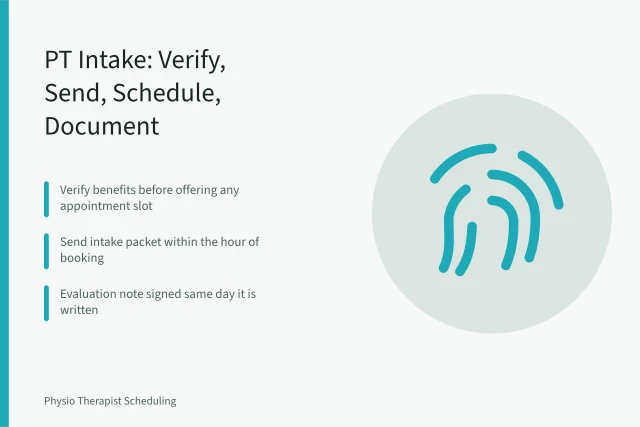
- Eligibility and authorization should be checked before a self-booked slot is confirmed, not on the day of the visit.
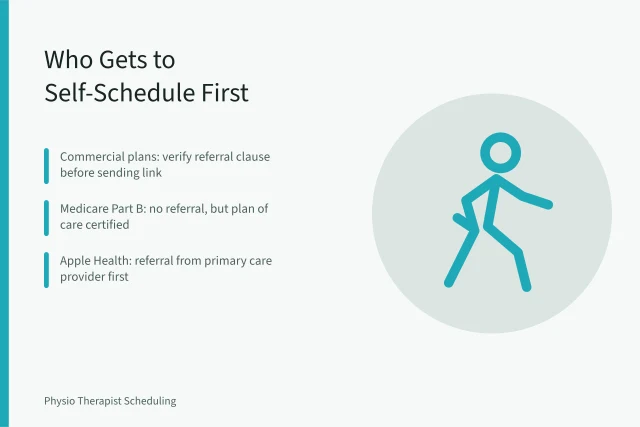
- Medicare Part B does not require a referral for outpatient therapy, yet the plan of care must be certified and the KX modifier applies once the annual therapy threshold is passed.
- Commercial plans, Apple Health managed care plans, and auto injury claims each carry their own visit caps and approval steps.
- Clinics that treat patients injured in British Columbia follow ICBC pre-approval rules instead of Washington payer rules.
Washington Direct Access Rules and Where They Stop
Washington's physical therapy practice act, chapter 18.74 RCW, and the physical therapy board rules allow a patient to be treated without a physician referral. A patient with knee pain can book an evaluation directly.
Legal permission to treat is not a promise of payment. Payers write their own referral requirements into the benefit contract, and those terms control the claim.
Two questions belong on the intake form. May this clinic treat? Will this payer pay? Staff should answer both before the appointment is confirmed.
Insurance Verification Before a Patient Self-Schedules
Self-scheduling moves the intake conversation onto a web form. Verification still has to happen before a slot is locked, or the clinic books a visit it cannot bill.
Collect the member ID, plan name, group number, and date of birth. Then confirm three things: whether the plan requires a referral, whether it requires prior authorization, and how many visits remain.
Self-funded employer plans sit outside state insurance mandates, and Washington has many of them. A plan that looks like a standard commercial product may follow its own document instead.
Scheduling staff also handle protected health information. The HIPAA Privacy Rule governs what a clinic may send by text or email and who may receive it, so an automated reminder must not confirm a diagnosis to a family member.
Record the result in the chart: date, staff member, payer, reference number, visits authorized. That note becomes the clinic's evidence if the claim is denied months later.
Visit Caps and Documentation Triggers by Payer
| Payer type | Scheduling constraint to check | Record before booking |
|---|---|---|
| Medicare Part B | Certified plan of care, annual therapy threshold, KX modifier | Certification date and threshold status |
| Commercial plan | Visit cap or prior authorization per episode | Authorized visits and expiration date |
| Apple Health managed care | Authorization from the managed care organization | Referral and authorization numbers |
| Self-funded employer plan | Plan document rules rather than state mandates | Whether a referral is required |
| Auto injury claim (PIP) | Claim and pre-authorization | Claim number and approved visits |
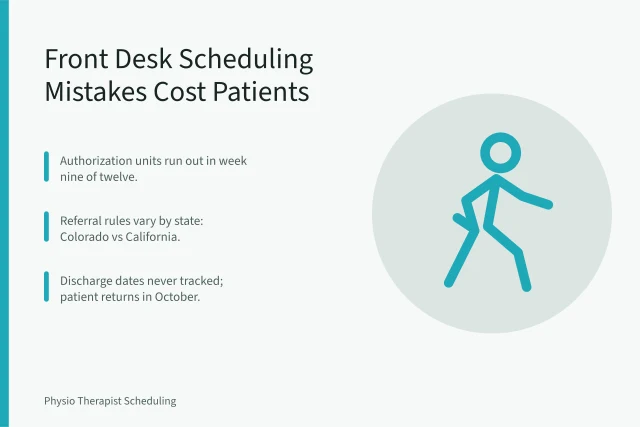
A self-booked slot is a promise. When verification happens after the visit, the patient receives the bill and the clinic receives the argument.
Medicare's therapy threshold matters because it can change mid-episode. Staff should check the running total before each visit so the KX modifier is added at the right moment, and CMS therapy services billing guidance describes the documentation behind those claims.
Example: Self-Scheduling a Knee Patient in Spokane
Self-Scheduling a Knee Patient in Spokane
- The patient books an initial evaluation online for knee pain after a weekend hike.
- The scheduler runs an eligibility check through the payer portal before confirming the time.
- If the plan requires a referral, the slot stays on hold while the patient requests one from the primary care office.
- If the patient has Medicare, staff confirm the plan of care is signed and note the position against the annual threshold.
- The scheduler logs the verification and confirms the visit, or releases the slot back to the schedule.
Front desks repeat this sequence many times a week, and small wording differences create missed fields. The AHRQ TeamSTEPPS communication module for office-based care describes structured exchange that reduces those errors.
Cross-Border Claims from British Columbia
Some Washington clinics are close enough to the border that patients arrive with a British Columbia auto injury. Those claims ignore Washington payer rules. ICBC physiotherapy scheduling rules require the insurer's approval before treatment starts, and the clinic carries the documentation burden.
A clinic cannot copy its Washington verification steps onto a BC claim. The ICBC scheduling guide for BC clinics covers pre-approval steps, waitlist design, and the records ICBC expects.
Questions to Ask Before You Commit
- Does the scheduling tool hold a slot until eligibility returns a result?
- Who owns verification internally, and is it logged in a standard field?
- Does a confirmation message reveal treatment details to anyone besides the patient?
- Can the schedule flag patients near a visit cap or the Medicare threshold?
- Is there a written process for auto injury and cross-border claims?