Guides
Physical Therapy Intake Forms and Scheduling: What US Clinics Need First
Step-by-step walkthrough of the intake to first-visit sequence for US physical therapy clinics: insurance verification, forms, documentation timing and slot design.
What to take away
- Verify benefits before you offer a time. Eligibility, visit caps and referral rules decide whether the first visit is billable.
- Send the intake packet the same day the appointment is booked, then chase it 48 hours before the visit.
- Front desk staff own insurance checks, consent and authorization. Therapists own the evaluation note.
- Hold one or two new evaluation slots per therapist per day so a late cancellation does not empty the week.
- Put every intake step in writing with a named owner and a deadline.
The intake to first appointment sequence
Six steps, in order. Skipping one moves the failure into the treatment room.
Intake to first appointment
- Capture the referral. Record the referring provider, the NPI and the diagnosis code before anything else.
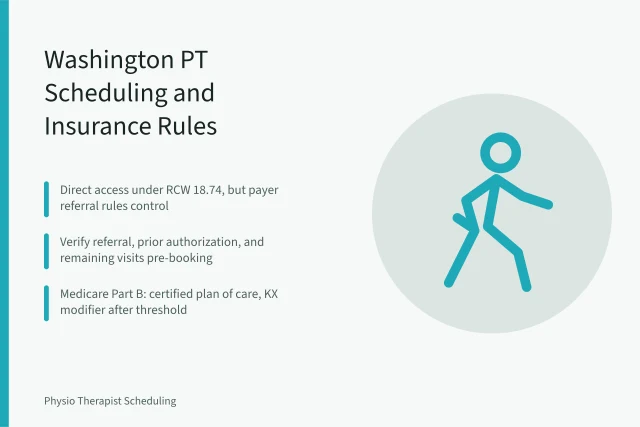
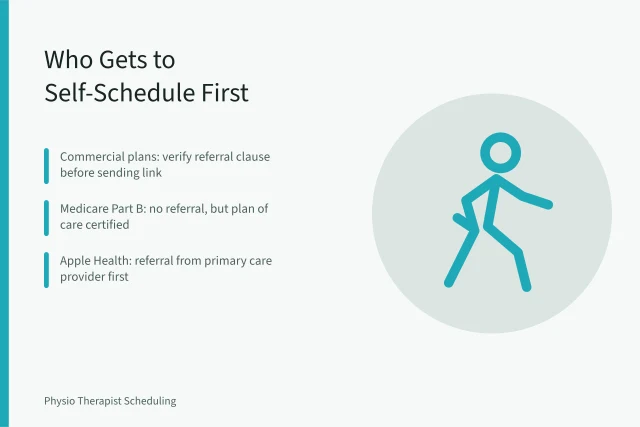
- Verify benefits. Confirm active coverage, copay, deductible, visit limit and prior authorization rules.
- Offer two time windows. New evaluations need a longer slot than follow-ups, so protect those blocks.
- Send the packet within the hour. Medical history, consent, financial policy and cancellation terms.
- Confirm twice. One reminder 48 hours out, one the morning of the visit.
- Book forward before the patient leaves. Two follow-up slots, or a written reason why not.
Insurance verification before the first physical therapy visit
Insurance verification checks
| What to check | Source | When |
|---|---|---|
| Active coverage and plan type | Payer portal or clearinghouse | Before offering a slot |
| Copay, coinsurance, deductible | Payer portal | At booking, repeated on arrival |
| Visit limit and plan of care rules | Payer medical policy | At booking |
| Referral or prior authorization | Payer and referring office | Three business days out |
| Ownership and self-referral limits | Payer contract and CMS guidance | Once per contract |
A failed check costs more than a cancelled slot. The patient arrives, the therapist evaluates, and nobody can bill the visit.
Physical therapy intake paperwork requirements
Keep the packet short enough that a patient finishes it in one sitting.
- Consent to treat and acknowledgment of the notice of privacy practices
- Medical history, medication list and prior surgeries
- Referring provider, NPI and diagnosis code
- Insurance card images, front and back
- Signed financial policy and cancellation terms
Missing items get flagged at check-in, not in the treatment room.
Documentation timing in the first week
Set a clinic rule rather than relying on memory. The evaluation note should be signed the same day it is written.
Documentation timing is driven by payer rules, and CMS therapy services billing guidance sets the frame for Medicare claims. Read it before you promise a patient anything about coverage.
Progress notes belong in the chart before the next visit is scheduled, not after. A note written three days late rarely matches the claim.
Example: self-pay knee evaluation booked for a Thursday
A patient calls on Monday with knee pain and no insurance card on file.
Rule of thumb: do not confirm a self-pay evaluation slot until the patient has seen the written estimate.
The front desk quotes a range, sends the estimate and the packet, and holds the Thursday slot for 24 hours. If the forms do not come back, the slot goes to the waitlist.
Every self-pay patient needs a written estimate before the visit, and sample quotes and the template shows the nine fields one should include.
Front desk and clinician communication
Front desk and clinical staff misread each other's notes more often than they miss clinical steps, which is why the AHRQ communication guidance for office-based care is worth reading.
Agree on one shared field for intake status. Free text threads lose the flag that matters.
Clinics rebuilding intake can compare their routine against named practices worth watching before they change anything.
New evaluation volume moves with season, referral source and payer mix, and demand trends for 2027 explains which forces to watch.
Slot design and scheduling software
Most scheduling tools let you reserve evaluation blocks, cap daily new patients and send automated reminders. Turn those settings on before hiring another coordinator. A template library shortens the time a new front desk hire needs to learn the sequence. Review the waitlist every week and let the software refill gaps from cancellations.
Privacy in scheduling messages
Reminders, texts and voicemails carry protected health information. The HIPAA Privacy Rule limits what a message may say and who may receive it.
Default to a neutral message with a callback number. Confirm the patient's preferred channel and consent to text at intake.
Cross-border policies
Clinics near the border should check how Canadian no-show rules vary by province before copying a policy.