Guides
Physio therapist scheduling software in Canada: timeline, billing and waitlists
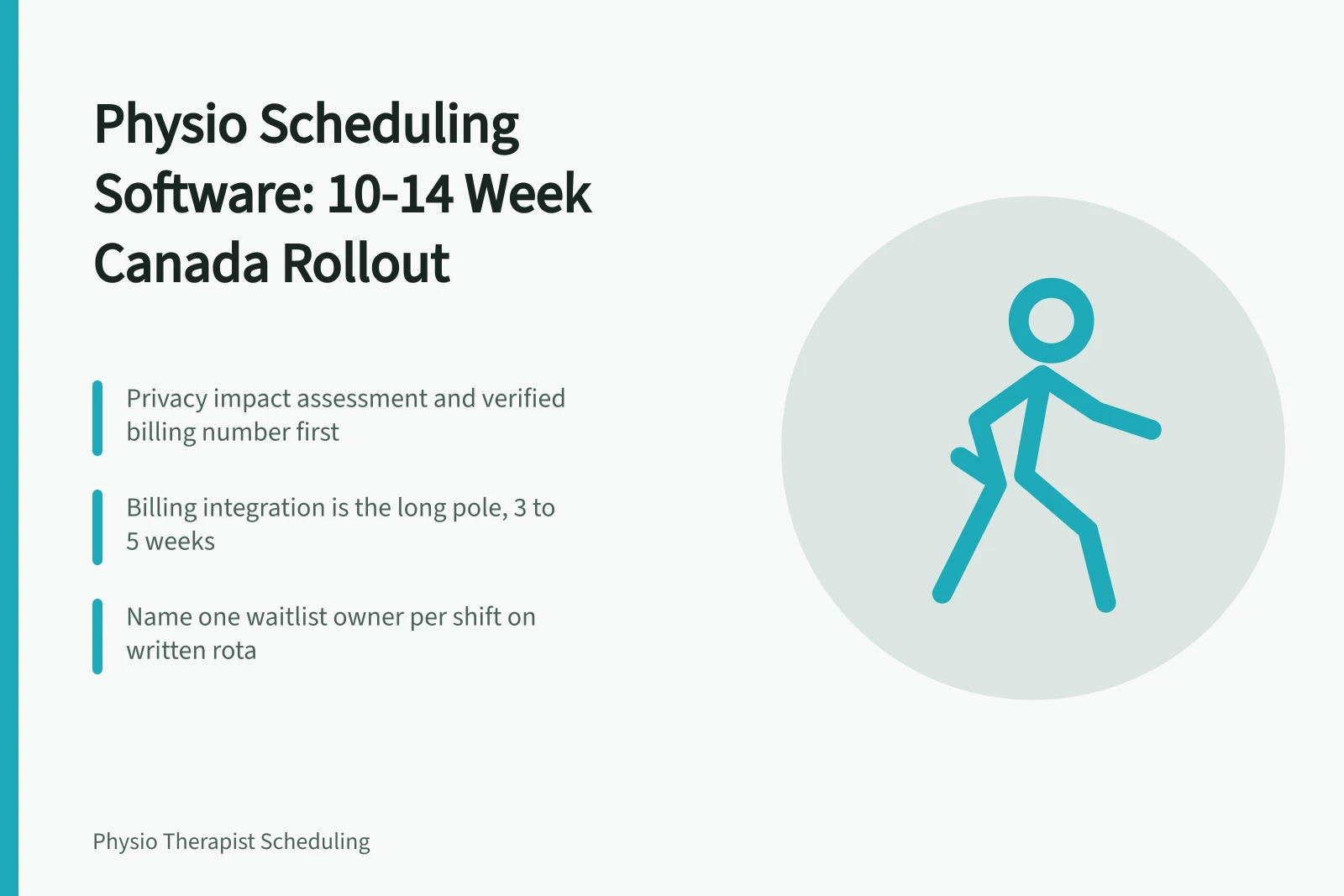
Physio therapist scheduling software in Canada takes 10 to 14 weeks. Billing integration is the long pole, and waitlist rules run alongside it.
What to take away
- Physio therapist scheduling software in a Canadian clinic takes 10 to 14 weeks to stand up, and provincial billing integration is the long pole.
- Two items block every other taska signed privacy impact assessment and a verified provincial billing agreement number.
- Waitlist rules and treatment code mapping are separate work streams sharing one database.
- The quiet failure is a waitlist nobody works, because front desk staff keep backfilling from paper lists.
- Run a parallel shadow period before you switch the old process off.
Stage by stage
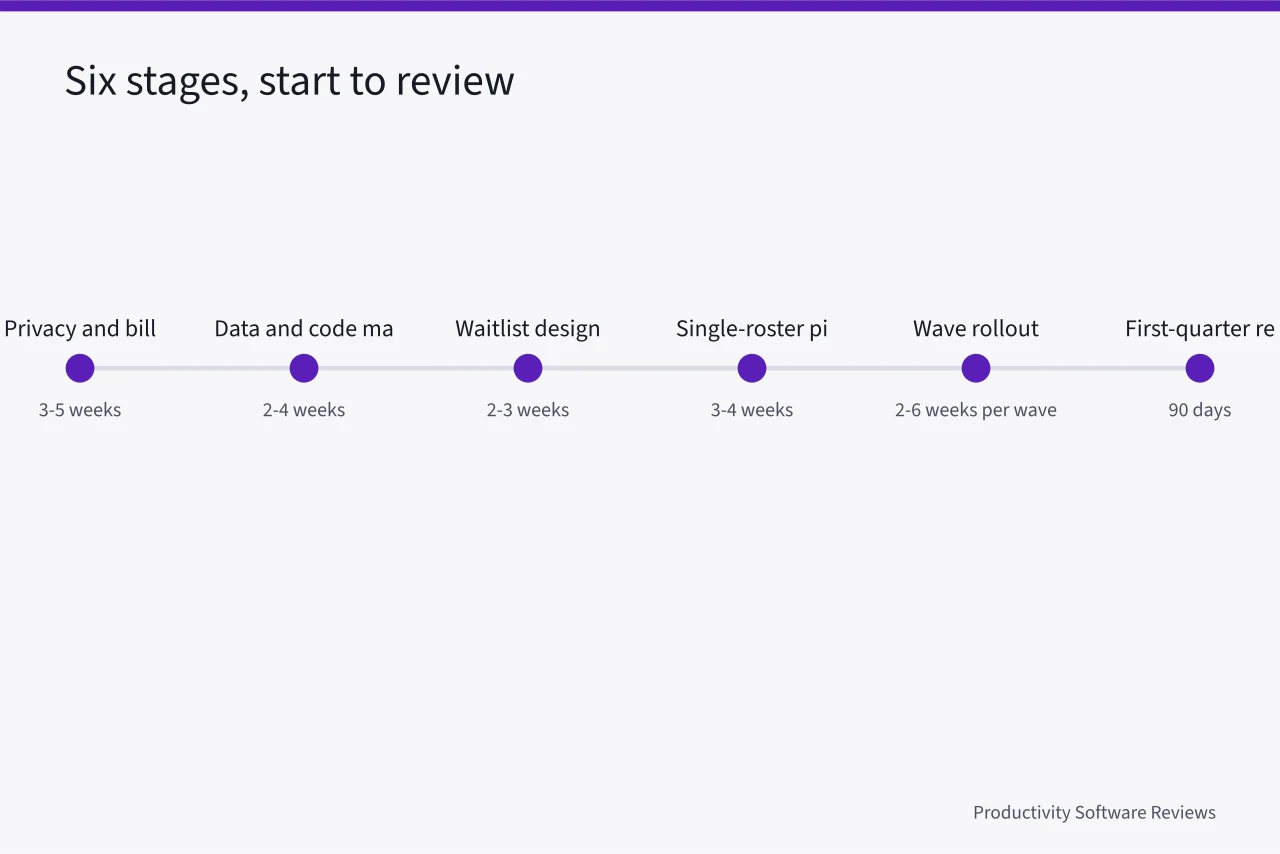
Every stage below assumes the one before it is finished. Durations are working ranges, not commitments. How contracts in this category are built is set out in physical therapy rates that pay the bills, worth reading before you ask for quotes.
| Stage | Duration | Result |
|---|---|---|
| Privacy and billing readiness | 3 to 5 weeks | Signed privacy assessment and a verified billing number |
| Treatment code mapping | 2 to 4 weeks | Therapists, rooms and codes matched to provincial codes |
| Waitlist design | 2 to 3 weeks | Rules for priority, expiry and backfill |
| Single-therapist pilot | 3 to 4 weeks | Two therapists booking live beside paper records |
| Wave rollout | 2 to 6 weeks per wave | One site live, old process retired |
| First-quarter review | 90 days | Waitlist and claim error reports against targets |
A stage is not done when the software is configured. It is done when a therapist works a full shift without opening the old system. Budget the final two weeks of each stage for habit change, not installation.
Scheduling modules inside a practice management system hold the booking rules and the queue. If your platform lacks that module, the work grows by one stage. Canadian clinics commonly run Jane App or Practice Perfect, where booking, waitlists and documentation sit in one record.
Compare what each product does in which physical therapy software deserves the subscription before booking a demo.
What has to exist before the first booked patient
Three items come before configuration, and none of them are technical.
- A signed privacy impact assessment covering the booking module. In Ontario, the Personal Health Information Protection Act governs it; Alberta uses the Health Information Act. Without that signature, no patient record enters the calendar.
- A verified provincial billing agreement number, checked with the ministry or its agent. Mapping treatment codes before that check is wasted effort, and the Ontario Health Insurance Act sets what may be billed.
- Written waitlist priority rules agreed by the clinical lead. A queue switched on without them fills with names and loses trust.
Only a registered physiotherapist may bill for physiotherapy in Ontario, and the Ontario Physiotherapy Act sets that framework. Confirm who signs off on code changes before mapping starts.
Retention is the prerequisite teams miss. Appointments and claim files need a stated retention period before the first live booking. The rules for retention and audit logs connect to physical therapy service standards, reviewed against real use, worth reading first.
Where it stalls
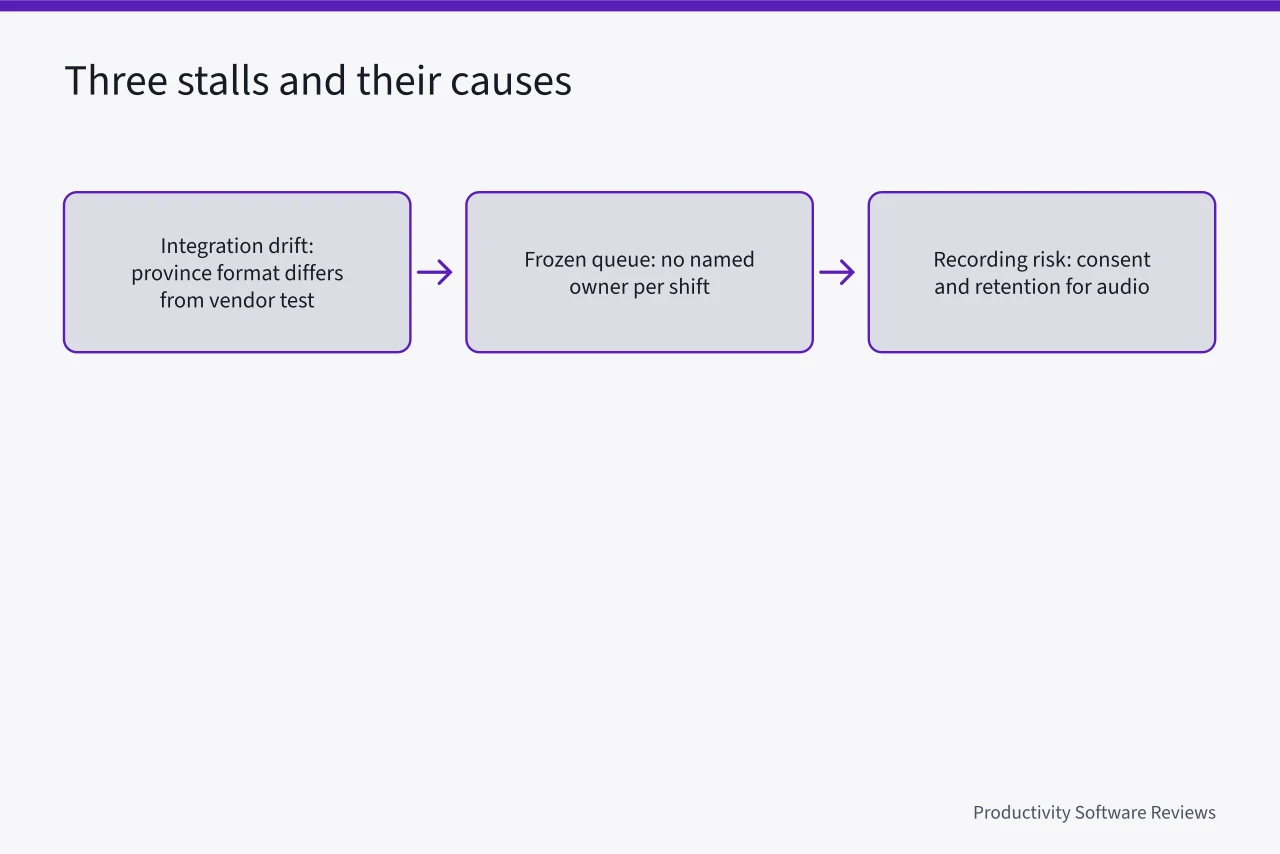
Provincial billing integration holds most of the elapsed time. Integration drift is the first stall. The claim file your province expects differs from the format the vendor tested, so rejections arrive weeks later.
A pilot run with one payer only, and no test file from a second, causes this. Systems described under appointment scheduling software often ship with one province's format preloaded, hiding the gap until wave two.
The frozen queue is the second stall. Front desk staff keep a paper list and backfill from it, so the software waitlist never shrinks. Nobody owns the queue for a given shift, so it turns into storage.
A waitlist is a work queue. If nobody owns it for a given shift, it behaves like a filing cabinet.
Confirmations and reminders are the third stall. A clinic that texts patients without a written consent and logging rule ends up guessing later. How to keep physical therapy jobs on time covers the daily version of that problem.
What to do while waiting
- Draft the retention schedule for appointments, audit logs and claim files.
- List every treatment code the clinic uses today, with monthly volume.
- Name one waitlist owner per shift on a written rota.
- Confirm which provincial act covers your health information.
- Decide how appointment confirmations will be sent and logged.
Clean data before import, because duplicate rooms produce duplicate claim lines later.